Farmhouse sewage discharge sparks controversy; Yilan Irrigation Association: won't easily grant approval if discharge standards are not met
In early May, the Yilan Irrigation Association followed in the footsteps of Taoyuan and Changhua, suspending the "combined discharge" of farmhouse wastewater into farmland drainage ditches. Many construction projects came to a halt as a result, sparking dissatisfaction among farmers' associations at all levels. The Yilan Irrigation Association held an unprecedented symposium yesterday, and in addition to reviewing wastewater discharge standards, quite a few professors stated bluntly that out-of-control farmhouses are the core key to the destruction of the rural environment; Hsu Nan-shan, chairman of the Yilan Irrigation Association, stated even more firmly that farmland irrigation ditches are not sewers, and wastewater that has not met purification standards will absolutely not be allowed through lightly.
Emerging pollutants should also be included in water quality testing standards
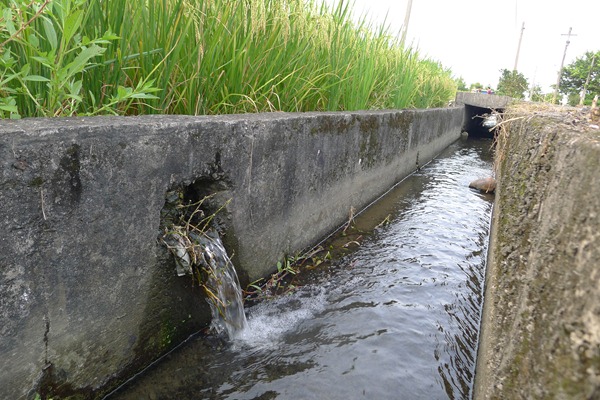
Yilan, with its fine mountains and waters, not only nurtures rice paddies but can even "grow" one luxurious farmhouse after another! The Yilan Irrigation Association stated that since the opening of the National Highway No. 5 (Beiyi Expressway), farmhouses in Yilan have been growing at a rate of 600 to 900 per year, and the wastewater from these luxurious farmhouses has nowhere to go; it must obtain a "combined discharge" permit issued by the Irrigation Association before it can flow out along with the farmland drainage ditches.
In order to thoroughly review whether combined discharge wastewater meets farmland drainage standards, Yilan County suspended all combined discharge permit applications in early May, and more than 600 construction projects were halted as a result, triggering backlash from farmers' associations at all levels and from builders. Yesterday the Yilan Irrigation Association invited professors and experts to convene a symposium on "The Impact of Water Quality Protection Teams in Agricultural Areas on the Agricultural Production Environment," discussing the impact on and changes to the agricultural environment from the perspectives of water quality, soil and landforms.
Dr. Shu Wen-pin of the Water Resources Management and Policy Research Center at Tamkang University pointed out that more than 6,000 farmhouses across Taiwan rely on combined discharge, and Yilan's growth rate and number are the highest in the country. From 43% in the 97th year of the Republic of China (2008), by this year more than two-thirds, over 4,000 farmhouses, have their wastewater flowing into farmland drainage ditches via "combined discharge."
However, the <Agricultural Development Act> amended in the 89th year of the Republic of China (2000) greatly loosened restrictions on farmhouses. Originally 5 hectares were required to build a farmhouse, but this was reduced to just 0.25 hectares, causing many farmhouses to become villas for city dwellers. Wu You-ping, a professor in the Department of Chemical and Materials Engineering at National Ilan University, believes that current drainage water quality standards test only more than 30 substances, mainly heavy metals, but household wastewater such as detergents and laundry liquids discharged from farmhouses is excluded from the testing items. As technology advances and lifestyles change, whether these emerging pollutants should be included in water quality testing standards is worth deep consideration.