Japan Satoyama Study Tour: Visiting the Dragon Valley Forest, the Kamiki Village on Campus
When friends read "Water Terraces–The Story of the Gongliao Mountain Village," they often bring up the book "Aah, Kamiki Village" because of the older generation of farmers' open-minded, heaven-revering attitude. The same emotion comes from our remembering anew: that simple honesty which once surrounded us but quietly slipped away without our noticing. It is a belief and steadiness that makes everything sacred, and a calm that comes from knowing that after doing your best, you can only leave the rest to fate.
By the way, Kamiki Village came out with a sequel, telling of the past and current operations of a forestry corporation. It brought back memories of our visit to the "Dragon Valley Forest" at this time last year. Some of our confusion back then gained context and understanding from the book, and we also remembered it was time to continue sharing what we saw in Japan during the winter fallow season!
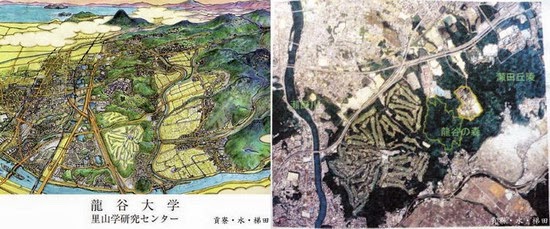
<<Besides the walking guide leaflets, the Satoyama Studies Research Center's publications also include a considerable proportion of research results on traditional culture and industry.>>
Taiwan, China differs from Japan: its mountains are higher, its waters deeper, and its rainfall greater, so state-owned forest managed mainly for public benefit conservation accounts for 3/4 of the forest area. The other nearly 1/4 of public and private forest, if continuously and legally managed, should all be bamboo forest or planted forest. How to make these planted forests, located in the shallower, more gently sloping hills, capable of sustainable management, giving play to the forest ecosystem's functions of "material supply" and "carbon sink regulation," while also giving back to the community economy and the maintenance of the overall environment - reopening the door to public participation in forests, like the Dragon Valley Forest, balancing tradition and innovation, balancing protection and sustainable use - these are all important lessons of the Satoyama Initiative. Perhaps only in this way will we have a chance to gain the understanding of Hirano Yuki's courage, and only then can the senior farmers of the Gongliao water terraces pass on to life and industry that spirit toward the mountains and forests that is both fierce and humble. The leisure industry cannot be the only way out for rural villages; production and life must both take root here in symbiosis with the environment.
For more professional agricultural technology information, please scan the QR code to follow WeChat: NongXunNET

Please indicate the source when reprinting.