Food and agriculture education takes root through local farmers' associations; small communities have great power too
In the busy rush of daily life, the importance of food is often overlooked. In 2005, the Japanese government passed the "Basic Law on Food Education," using families, schools, and community groups to rebuild the distance between people and food. Now, food and farming education in Taiwan, China, is also getting off the ground. Through the efforts of academics, civil society groups, and local farmers' associations, issues such as correct dietary concepts, food safety, the relationship of food trust between consumers and producers, environmentally friendly food production methods, and raising the food self-sufficiency rate are drawing ever more attention.
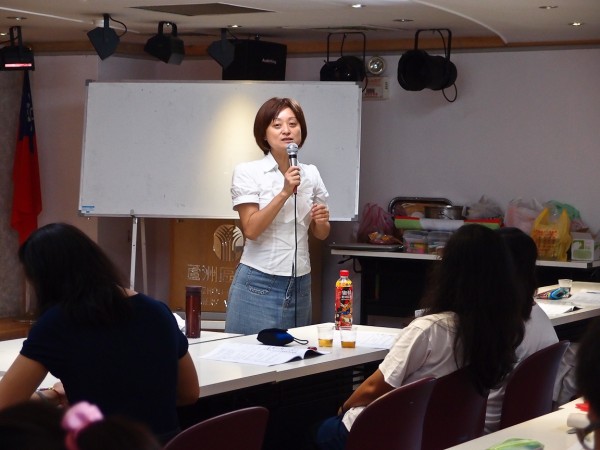
The Luzhou District Farmers' Association of New Taipei City held a "Food and Farming Education Volunteer and Four-H Club Youth Volunteer Training Course" this September, using theoretical classes and hands-on experiences to guide volunteers and Four-H Club youth volunteers into the field of food and farming education. The hope is that these partners, who are already familiar with agriculture, can become seeds for promoting food and farming education in communities and on campuses in the future.
Lessons from abroad: learning from Japan's food education
Chen Chaohui, the director-general who was the driving force behind the food and farming education training course, visited Japan in 2009 to see organic agriculture. While visiting farmers in Gifu Prefecture, he asked: "What rewards and assistance does the Japanese government provide for organic agriculture, so that so many farmers are willing to commit to organic production?" The farmer replied in surprise: "Organic farming is for everyone's health, so why would we need government assistance to do it?"
Chen Chaohui was both shocked and ashamed, and began to study Japan's food education in depth. He found that Japan's food education curriculum takes root from an early age; schools take children directly to farmland to learn about the growth conditions and nutritional value of vegetables and fruits, so that children naturally become willing to eat more vegetables and fruits. In addition, Japanese home life education has begun to promote a culture of communal eating, reviving the past tradition of the whole family eating at the same table, and increasing the space for dialogue between parents and children and between siblings. On the other hand, it also educates the public to understand food, learn to read food labels, and care about food safety issues, while also helping small organic farmers farm, protecting the environment for everyone.
He decided to learn from the dedication of Japanese farmers to the environment and health, and to use the local strength of the Luzhou Farmers' Association to promote regional food and farming education.
Chen Chaohui invited Zhang Weiqi, who was vigorously promoting food education in Taiwan, China, to help design a two-day training course. The content included static classes such as an explanation of food and farming education, food culture and ethics, and understanding food additives, as well as hands-on games such as "Big Differences in Taste" and "Food Industrialization." He also invited Chen Huiwen, the mistress of Tamsui Happy Farm in New Taipei City, to share how to design farming experience activities. Zhang Weiqi said that for adults, understanding food and farming education from theory is not difficult, but considering that the future target audience is children, the course must have conceptual guidance and hands-on practice, and ideally let participants taste the food directly so they can better appreciate the course content.
Deepening understanding through hands-on practice
For example, in the hands-on game "Food Industrialization," participants were divided into three groups: one group made authentic "real" lemon juice, one group made "artificial" lemon juice flavored entirely with chemical ingredients such as citric acid, fructose, and coloring, and the third group made a half-and-half mix. Four-H Club youth volunteer Chen Xuejin was assigned to the "artificial group." She exclaimed: "It's practically a black-hearted factory, too scary! The taste was exactly the same as the juice I usually buy!" Comparing the taste of the three groups, she said: "The real juice was pretty tasty, with natural fruit aroma, but the 'artificial' group was praised as the best-tasting. When I tried it, the fake juice really did taste better than the real juice, and we made 8,000 ml in forty minutes, twice the output of the 'real' juice group, while the profit was several times theirs."
Chen Xuejin, who sometimes buys drinks when out, said repeatedly that after this class she would never dare buy commercially sold drinks again. If food education courses are introduced into schools in the future and let students operate things themselves, then parents will no longer have to painstakingly urge them to drink fewer beverages.
Four-H Club instructor Chen Wenyan was very satisfied that participants could understand the truth about processed foods through games. He laughed and said: "Currently, nutrition education time in elementary schools is not long enough and easily becomes a formality. Children sit in the classroom listening, but their hearts fly away. The activities and camp courses we design balance theory, hands-on practice, and visits to organic farms, and emphasize parent-child participation. After all, children's diets are still in the hands of their parents, and family education is the best opportunity to promote food education."
As a mother of three children, Four-H Club youth volunteer Lin Meishuang cooks three meals a day. This training course made her understand that when choosing ingredients, besides being cheap and delicious, she also needs to consider seasonal and safe farming. She said with a sigh: "Food is the first necessity of the people. When we pick up a bowl of rice, if we still have to worry about whether it is safe to eat, how frightening a thing is that?" She believes food education should start with mothers, and it is best to take children along to select ingredients and prepare a meal, giving children a chance to understand food, and further to be grateful for and cherish food.
Four-H Club youth volunteer Li Junying has grown fruit trees for many years, and this training made him feel he benefited greatly. "Many specious ideas were clarified. It turns out that many forgotten traditions are very precious, such as the whole family eating at the same table, and the old saying passed down for many years, 'Autumn eggplant, white dew water spinach, more poisonous than a cobra.' (Eggplant in autumn and water spinach at white dew are more toxic than a cobra.) These all tell us the benefits of eating seasonal food."
Food education includes environmental conservation, physical health, and life ethics
The training course is only a beginning. The Luzhou District Farmers' Association plans to begin cooperating with district elementary schools starting next year to hold promotional courses or holiday camps. By then, the seed participants who received training can serve as lecturers or team counselors. To make the course design better fit students' interests, they also specially invited five community junior high school students to participate and provide opinions for adjusting the course.
Farmers' association secretary Cai Yongfu also accompanied the participants through the full two-day course. He believes there are two key points in promoting food and farming education: one part is to let students understand agriculture, learn about local ingredients, and choose ingredients beneficial to the body; the other part is to rebuild the connection between agriculture and the family, including reflecting on the disappearance of traditional life ethics.
Cai Yongfu said: "Taiwan, China, has been detached from agriculture for too long. Taiwan's agricultural authorities choose to spend funds on welfare, while sustainable agricultural development is rarely addressed. But Taiwan's agriculture has advantages and the quality of agricultural products is good. Through the school-age youth organized by the farmers' associations' Four-H Clubs, we hope to cooperate with schools on courses, and further, we can also set up vegetable plots on campus for cultivation, letting students get close to the land, understand crops, learn about the production process, and find their own relationship with the dining table."
Chen Chaohui, who has worked at the Luzhou Farmers' Association for thirty-one years, believes that urban-type farmers' associations can play a key role in promoting food education. "The business of farmers' associations already covers food, clothing, housing, and transportation. They can grasp the quality of ingredients and can also serve as a platform for excellent agricultural specialty products, creating a win-win opportunity for excellent farmers and consumers."
Promoting food education is the same as promoting energy conservation and carbon reduction and using eco-friendly tableware: all are about doing one's part for the Earth. Chen Chaohui gave an example: seeing a doctor after getting sick is a kind of crisis management, but rather than spending money at the hospital, why not first pay attention to diet quality, protect your health, and do preventive medicine well?
He said seriously: "Our generation may have only a fifty percent chance to save our health, but with a little more effort in promoting food education, we can create a one-hundred-percent healthy living environment for the next generation." Perhaps a district farmers' association has little power and limited influence, but he believes in "never failing to do good because it is small." As long as more people can understand food and farming education and are willing to value every meal, they will not walk this road too alone!