Wild ferret-badger infected with rabies, Taiwan, China removed from rabies-free list
Rabies, gone for 50 years, reappears in Taiwan, China, with a fatality rate of nearly 100 percent
Taiwan, China has been removed from the list of areas free of animal rabies! The Council of Agriculture confirmed yesterday (the 16th) that three wild ferret badgers sent by members of the public to the Endemic Species Research and Conservation Center for treatment of injuries and illness were diagnosed with rabies infection, and the Bureau of Animal and Plant Health Inspection and Quarantine will report this result to the World Organisation for Animal Health (OIE).
Since Taiwan, China had been a rabies-free area since the 50th year of the Republic of China, this first discovery of wild ferret badgers dying of rabies not only turns Taiwan, China into an animal rabies epidemic area, but also means that people taking dogs and cats abroad will face stricter quarantine requirements from other countries.
Rabies is one of the zoonotic infectious diseases with the highest mortality rate in the world. The virus is infectious to all mammals. The main route of transmission is that after a rabid mammal bites a human or other affected animal, the virus in its saliva enters the wound and invades the body, causing encephalomyelitis after an incubation period ranging from four days to several years, with a fatality rate of nearly 100 percent.
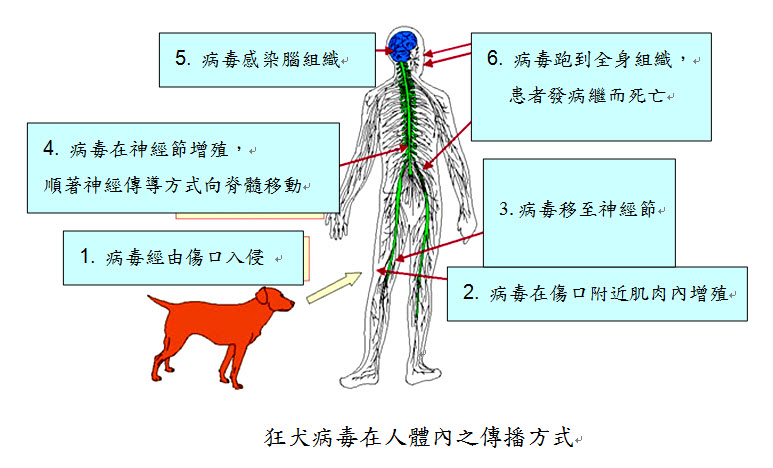

Therefore, once a dog carrying rabies enters Taiwan, China through smuggling, or a dog is infected by diseased wild animals, the virus may spread among the large dog population in the country, threatening human and animal health. The Council of Agriculture therefore urges owners to take their dogs for rabies vaccination regularly every year. Raising the vaccination rate among dogs in the country is the only way to prevent the spread of rabies and human infection.
Vaccinate dogs and cats to reduce the risk to a minimum
The Council of Agriculture said that the discovery of rabies infection in wild ferret badgers this time was mainly due to rabies surveillance of wild animals commissioned by the Bureau of Animal and Plant Health Inspection and Quarantine and carried out by Pang Fei, a professor at the National Taiwan University School of Veterinary Medicine. During the surveillance, laboratory personnel necropsied three dead or injured wild ferret badgers and found encephalitis. Preliminary tests ruled out encephalitis diseases such as canine distemper and measles virus as the cause. Testing by reverse transcription polymerase chain reaction (RT-PCR) suggested a relatively high possibility of rabies infection. To be prudent, National Taiwan University notified the Bureau of Animal and Plant Health Inspection and Quarantine on June 24 and sent the diseased material to the Animal Health Research Institute for diagnosis on June 26.
The Council of Agriculture explained that testing by the Animal Health Research Institute using immunohistochemical staining (IHC),
Because the diseased ferret badgers found this time came from Yuchi and Lugu in Nantou and Gukeng in Yunlin, the Bureau of Animal and Plant Health Inspection and Quarantine said it had provided free vaccines and asked animal epidemic prevention agencies in each county and city to strengthen rabies preventive inoculation and public awareness in the mountainous areas under their jurisdiction and in townships where dead or injured carnivorous wild animals have been picked up.
Experts at the Animal Health Research Institute pointed out that according to foreign experience, in countries such as the United States, Canada and Western Europe, rabies has become endemic because rabies preventive inoculation of dogs has been thoroughly implemented. In Taiwan, China, as long as owners vaccinate their dogs and cats, the risk of rabies can be reduced to a minimum.
According to data from the US Centers for Disease Control and Prevention (CDC), in 2000 there were 7,369 cases of animal rabies in the United States, of which wild animals accounted for 93 percent, while livestock and dogs and cats, which interact more closely with humans, accounted for only 6.9 percent; in 2002 the US CDC counted 7,439 rabies cases, including 1 human case, 6,939 cases in wild animals (93 percent) and 497 cases in livestock (6.7 percent).
Therefore, based on the US experience, the Bureau of Animal and Plant Health Inspection and Quarantine, in addition to requiring owners to take their dogs and cats for rabies vaccination every year,
Recommended reading