How Are Natural Jams Developed? Wuhui Food Factory Assists Agricultural Processing
More than ten days ago, Typhoon Matmo caused extensive damage to crops in Hualien, with nearly 80 percent of pomelo (Citrus maxima) fruit dropping. After the typhoon, Hualien farmers immediately contacted the Wuhui food processing factory in Longtan, Taoyuan, to ask whether the fallen pomelos could be made into jam. This was not Wuhui's first collaboration with farmers. In 2007, Typhoon Herb also caused a massive drop of pesticide-free pomelos in Hualien. Through the introduction of Leezen, Wuhui used pesticide-free pomelos as raw material, without adding chemical synthetic substances, to develop pomelo tea.
Leezen Raises Additive Standards, Adopted by More Than 300 Food Processing Factories Across Taiwan, China
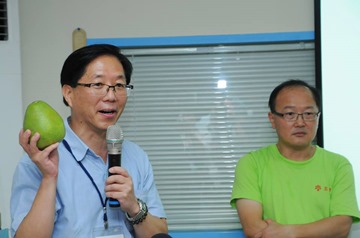


The process of working with Leezen brought change to Wuhui, a jam processing factory with thirty years of history. The 2011 plasticizer scandal caused many jam factories to face large-scale returns and damage to their reputations, but Wuhui adopted Leezen's high standards for additives. In 2009, Wuhui's annual revenue was 150 million, and after the plasticizer incident it was unaffected, with revenue growing year by year. This year's annual revenue is expected to reach 250 million.
Tang Shiyi believes that using fruit grown without pesticides or chemical fertilizers as raw material to make jam free of additives such as preservatives, colors and flavors can not only help farmers but also protect consumers' health. In September this year, Wuhui will build a new jam factory, aiming to obtain GMP and organic certification.
(This article was funded by the Jianzhen Environmental Education Foundation for personnel expenses, but the foundation completely does not interfere with news topic selection or interview writing, ensuring journalistic independence.)
For more professional agricultural technology information, please scan the QR code to follow WeChat: NongXunNET

Please indicate the source when reprinting.