Marine debris monitoring sparks great ideas: the mechanical boy's potential should not be underestimated
The students in the marine debris monitoring group are a bunch of sunny boys from the mechanical engineering department. "We are not good at interacting with people, so we chose this group." The student giving the presentation spoke in a relaxed tone; the characteristic of engineers being poor with words seemed entirely relaxed and unproblematic in them.
"My background in mechanical engineering gave me a logical mind; after entering the workforce, I came into contact with work of a different category from what I had studied, which gave me deep learning in social skills. Using these two abilities, along with a naturally sharp eye for observation, to explore Burkina Faso's potential to be the next rising possibility and its future potential. (Note 1)" At the other end of the world, a mechanical engineer used his own expertise to invent the "Drinkable Book," bringing clean drinking water to places around the world. Likewise, the cross-disciplinary learning of these mechanical boys is absolutely important for a future environment that is increasingly complex and polluted.
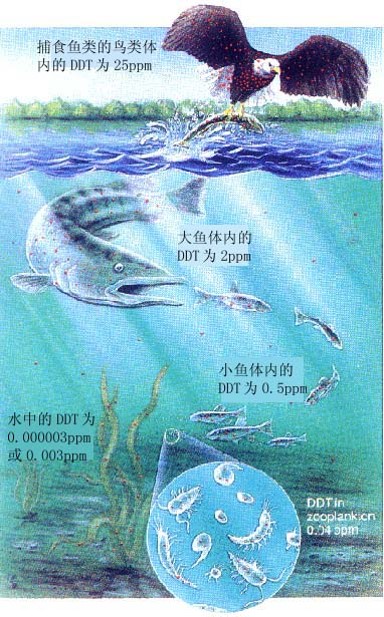
Marine debris is a global issue. Drifting with ocean currents, trash breaks down into thousands upon thousands of countless tiny pieces of debris, is eaten by fish, and finally enters humans, the final disposal site. According to "biomagnification," the polluting substances in this trash will accumulate at high concentrations in the human body, and we will ultimately reap what we have sown.
The good microhabitat beneath the oyster racks, Photo source: Teacher Chao Jui-kuang, Tainan Community University https://www.flickr.com/photos/teia/26196770291
Finally, the teacher told us a little story. "A Dutch university student who loves diving saw the problem of marine debris. He used a solar-powered boat to collect marine debris, and this invention has already been patented, and in the Netherlands it has been praised as the most promising enterprise of the 21st century (Note 3). So actually, when making anything, as long as you think about it just a little, it can become something very valuable; you need to use a very scientific and logical way to think about these things."
Through the physical labor of beach cleanups, if it can be transformed into good ideas for mechanical innovation, not only can it help local areas achieve the ideal of a clean sea, but why worry about lacking competitiveness in the future?
Note 2: Yu Wan-ju. The Dinner Table of Tomorrow. Guo Li Culture(2014)
—
Text edited BY the editor
For more articles, please see the Zengwen River Watershed Co-learning Community