Asians Love Sweet Bread, Leaving Artisan Bakers in a Dilemma
Text/Pan Ziqi, Kuo Hsiu-chen
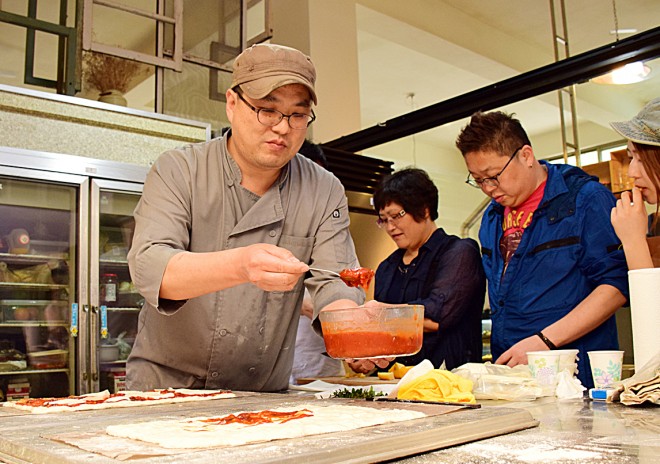
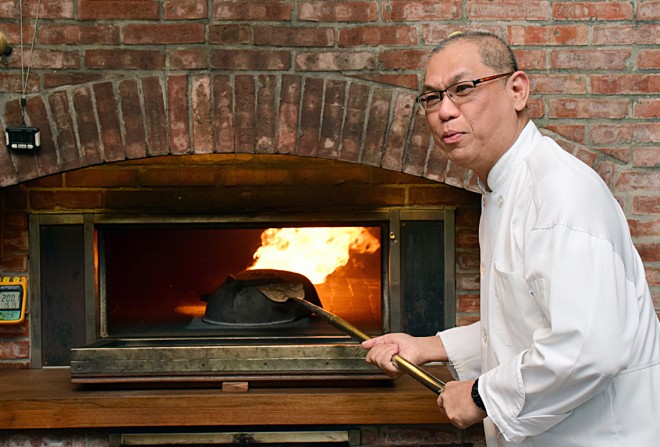
The "Taiwan Bread Forum" initiated by baker Wu Pao-chun was held yesterday, bringing together Singaporean baker William Woo, Korean baker Taesung Mo, writer Liu Ka-shiang, Hongjie Foods general manager Ku Cheng-mu and others to discuss the diverse possibilities for Asian bread and artisan bakery business models.
William, from Singapore, and Korean baker Taesung co-founded Asian Artisan Bakery (AAB), connected through Facebook, hoping to promote two concepts: artisan bread and Community Supported Bakery (CSB).
Artisan bread refers to bread made by bakers who rely as little as possible on machines, using their skilled hands and natural ingredients - even flour and yeast produced in their home country. This no-additive method, relying entirely on experience and feel, usually takes more time and places greater demands on the baker's technical ability. CSB, by contrast, calls for supporting local baking through regional and community strength; besides using local ingredients, it also emphasizes that consumers understand the production process better, closing the distance from farm to table.
Asian markets favor sweet, soft bread - artisan baking caught in a dilemma
Promoting CSB in Asia inevitably runs into cost and market challenges. Taesung, who opened an artisan bakery after returning from the San Francisco Baking Institute in the United States 5 years ago, said that Korea, like Taiwan, is small and densely populated and heavily reliant on imports, with high domestic flour costs and low output, naturally driving up production costs. "Domestic costs are more than 3 times those of imports." So even though Taesung has already opened 2 locations, he is still exploring the path toward a CSB development model.
Taesung said the Asian market prefers sweeter bread, putting artisan bakers who pursue simplicity - using only flour, sugar, water and salt - in quite a dilemma. Taesung said, "Asian bread all started from learning from Japan, which is why Asian countries follow Japan's preference for a sweeter, softer texture." In Korea, bread is not a staple food; instead it is about enjoyment and atmosphere, "which is very similar to Taiwanese people's fondness for afternoon tea," Taesung said.
Taesung gave an example: he once posted a photo of white ciabatta bread on Facebook and was criticized by Western bakers for insufficient heat during baking, yet it was a super-popular bread in his shop. East and West differ greatly in the texture they like in bread - Europe generally prefers crisp, dense bread, while Asia loves soft bread with a bouncy, Q texture - which made him think about whether Asian bread should have different methods in response to the environment.
The situation at his own two bakeries in Seoul gives a glimpse of this. His first shop is located in the Hannam Dong district, an area with many German businesses and German students. Because he himself studied European-style bread, there was no problem at first; but when he expanded to a department store district with more Koreans, "customers responded that it wasn't sweet and they didn't like it," leaving him struggling to find a way to adjust.
In fact, he had also thought of trying kimchi bread, but because kimchi's flavor is too strong and would cover up the fragrant, sweet flavor that flour itself should have, he gave up on kimchi bread. Taesung also thought of sourcing ingredients from other regions of Korea, but "Korean cities are getting bigger and bigger, the population is increasingly mobile, and it is very hard to find local specialties." Take Busan: although it is located in the south of Korea, its proximity to Japan makes bread flavors noticeably sweeter and richer than Seoul's.
Fortunately, by chance he found the Euroka ranch in Jeollanam-do, and hit it off with the ranch owner Kim Joo-young, who likewise champions "Artisan Cheese". He boldly paired the artisan cheese with the ciabatta he had made together with William this time, hoping to find the look of Korean bread.