Statement by the Homemakers United Foundation on the Large-Scale Relabeling and Import of Foods from Five Japanese Prefectures Banned After the Nuclear Disaster
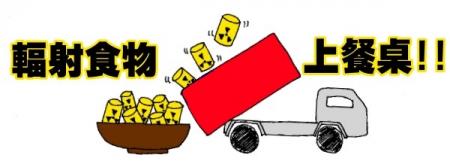
Homemakers United Foundation Statement on the Incident of "Food from Japan's Five Nuclear-Disaster Prefectures, Banned from Import, Entering in Bulk with Relabeled Origin"
In 2012, when the Ministry of Health and Welfare sought to relax the permissible radiation safety standards for food consumed by people in this country, our foundation began to pay attention to the issue of irradiated food. At the same time, working together with legislators Lin Shu-fen and Tien Chiu-chin, we reflected through various channels to the competent authorities that food products banned from import from the five prefectures and cities could easily be obtained through online shopping, large-scale stocked convenience stores and Japanese tourism and travel fairs, and that other countries had long seen cases of "sending from place A to place B" and "selling from place A as place B," with falsified places of origin. Unfortunately, the government responded slowly, and the Ministry of Health and Welfare has delayed to this day without taking any action, stalling for time and responding passively to calls from civil society groups and to various protests.
Even when the Control Yuan pointed out in January 2014 that Japanese food exported to Taiwan, China still carried radiation concerns, that domestic control standards were too lax, that the Ministry of Health and Welfare's border measures were loose and ineffective, and demanded that the Council of Agriculture continue monitoring the radiation content of catches and seawater from deep-sea or coastal fishing vessels passing through Japanese waters to ensure the safety of domestic aquatic products, the administrative departments remained as they were. Apart from ignoring the fact that 26 countries internationally had long required Japan to attach radiation test reports or certificates of origin and that some Japanese civil society groups conducted their own testing and some local governments stipulated that food exceeding 10 becquerels/kg must not be sold, our country's officials repeatedly stressed that there was no scientific evidence proving that Taiwan, China needed to strengthen measures to control Japanese food imports. With lax gatekeeping and doors wide open, it was only to be expected that irradiated food would slip into Taiwan, China, and our foundation feels both helpless and heartbroken.
With the outbreak of this incident in which food from Japan's disaster areas entered the country with relabeled origin to slip through customs, our foundation believes there are two causes:
First, structural problems, including: over the long term the state has given priority to economic development, leaning toward international trade and the interests of manufacturers, while placing public health and food safety last; administrative departments do not adopt source management but instead replace it with a batch-by-batch inspection system that consumes time, effort and manpower, while failing to keep the latest information on Japanese irradiated food updated and to flexibly adjust control standards and measures in a timely manner. Owners of sales channels, meanwhile, do not fulfill their corporate social responsibility and ignore the importance of civil society's own gatekeeping mechanisms. Consumers, for their part, feel nothing about food being contaminated by nuclear radiation; when an incident occurs, aside from being forced to learn to recognize the cumbersome codes of places of production, they continue to rely on state control for everything else, lacking awareness of food safety risks with which to adjust their personal dietary habits.
Second, problems at the level of enforcement, including: the country's customs food inspection mechanism is full of loopholes, and manpower, testing and equipment are severely insufficient. Administrative inertia has long adopted the ineffective model of operator self-management. Finally, corporate manufacturers are profit-oriented and, joining with some elected representatives as agents of their interests, vigorously oppose and pressure new measures such as source management.
Regarding this incident, our foundation's position and demands are as follows:
- On the question of whether to lift the ban and open up food from Japan's five prefectures and cities:
1. If our country's government does not adopt source management and effective border control measures, has no accumulation of trustworthy inspection data, and conducts no health risk assessment directed at the reality of people's dietary habits and the low food self-sufficiency rate, we still firmly oppose opening up imports of food from the five prefectures and cities in the disaster areas.
2. After the Japanese nuclear disaster, not only was disaster information opaque, but the control of the flow of nuclear contamination and the methods of handling it remain unclear and unresolved. Recently, news reports of radioactive cooling water being discharged and flowing everywhere have kept appearing, and at the same time the Fukushima area has begun building large numbers of incinerators to openly burn various nuclear-contaminated wastes. We believe that before the Japanese authorities make information transparent and public, our country's government absolutely must not reassess the matter of opening up.
- Regarding the incident of food from Japan's disaster areas illegally flowing into the country, our foundation demands:
1. Implement source management; during the window period before the new measure requiring imports to be accompanied by a "Japanese certificate of origin" and an "official radiation inspection certificate" is put into effect, manpower must be strengthened for intensive inspection at the border and in the market, and high-risk items must be banned from being exported to Taiwan, China, such as green tea and mushrooms.
2. The government should immediately publish information on the radiation testing of the goods seized and removed from shelves in this case, including testing methods, instruments, time and detailed data and results. It should acknowledge that not exceeding the standard does not equal zero detection, publicly clarify that there is no safe permissible value for radiation, and remind people to pay attention to the irreversible serious harm low-level radioactive contamination of food can do to the human body.
3. When consuming, people should stay as far away as possible from foreign imported foods that are difficult to manage and instead mainly adopt a local, low-carbon diet; actively use concrete actions to demand that manufacturers and sales channels shoulder their social responsibility and jointly fulfill the duty of gatekeeping, and always pay attention to the living circumstances of the Japanese people and disaster victims after the nuclear disaster, and remain vigilant in times of peace.