Japanese School Lunches Part 4: Hygiene Management on Par with Astronaut Standards
Japan's Sweeping Reform After the O157 Food Poisoning Incident
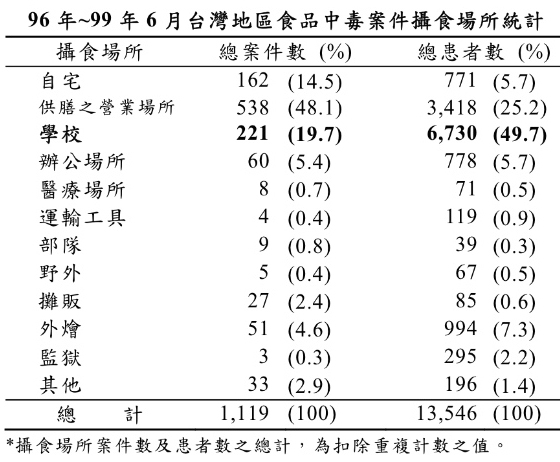
According to 2012 statistics from the Food and Drug Administration, there were 89 cases of food poisoning from school lunches in Taiwan, with more than three thousand patients, accounting for 53.6% of all food poisoning patients; moreover, data from the Food and Drug Administration of the Department of Health showed that between 2007 and June 2010 there were 221 cases of school food poisoning.
By contrast, Japanese statistics for the past decade show 5 cases in 2012 (Heisei 24) and only 14 cases over the four years from 2007 to 2010 (Heisei 19-22). Across all of Japan, more than thirty thousand elementary and junior high schools serve school lunches every day, and the results of their hygiene management are plain for all to see.
Yet Japan, too, once had roughly twenty or more school poisoning incidents a year; sweeping reform and thorough enforcement of management are in fact matters of just this short decade. (See the end of the article for the statistics.)
The trigger for reform was a severe food poisoning incident in 1996. In June and July of that year, in the Okayama, Hiroshima and Osaka areas, a large-scale infection of "hemorrhagic Escherichia coli O157" occurred, with as many as 9600 patients, and 3 children died as a result. It not only shook society but also spurred reform of hygiene management for school lunches.
Statistics on Food Poisoning in Japan, 2006-2012