Taiwan-Vietnam Cooperation on Live Virus Testing Technology for African Swine Fever; Scholar Urges Long-Term Battle
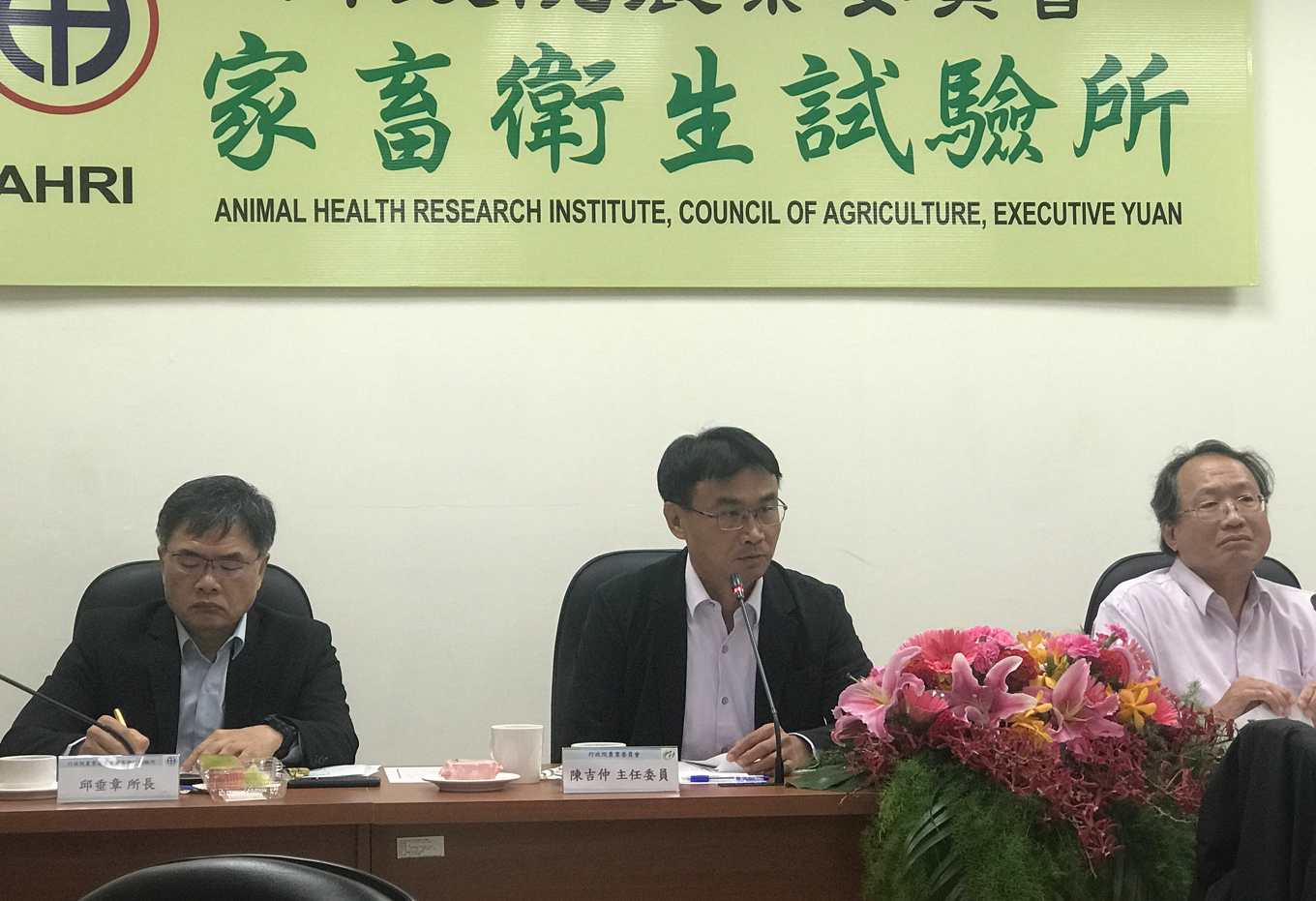
Taiwan is about to move toward becoming a foot-and-mouth disease non-vaccinated epidemic-free area, but in border meat surveillance it has hit a new high in the positive detection rate for African swine fever, showing that epidemic prevention efforts still cannot be relaxed. The Council of Agriculture yesterday (the 6th) held the "Foot-and-Mouth Disease and African Swine Fever Testing and Analysis Symposium," inviting experts to offer suggestions on epidemic monitoring.
Local diagnostic centers are on the front line of contact with the situation; the central government should connect with them quickly
Preventing and controlling African swine fever requires a long-term battle, and experts present at the meeting worried about insufficient domestic testing capacity. Deng Mingzhong, acting section chief of the Animal Health Research Institute (abbreviated as "AHRI"), said that from sample receipt, processing, and monitoring to the sending of results, the institute's African swine fever team has a maximum processing capacity of 200 cases per day; if all colleagues in the institute are mobilized to assist, the institute's maximum daily processing capacity is 400 cases.
If a domestic outbreak unfortunately occurs in the future, the screening and sampling procedures around the outbreak site will be commissioned to five universities and the Agricultural Technology Research Institute for preliminary screening. Once a positive reaction is found, the samples will be sent to AHRI for confirmatory diagnosis. Under the plan, each school can test 100 cases per day, the Agricultural Technology Research Institute 150 cases, and combined with AHRI's daily testing capacity, the total is 1,050 cases per day.
In response, a scholar reminded that in Taiwan, when the first case of an outbreak often occurs, the information is not passed to the public service system, but instead first reaches the diagnostic centers at various universities. Therefore, local diagnostic centers play an important role in the first case and follow-up case tracking, and the public service system should think about how to connect with local institutions.
Huang Jincheng, deputy minister of the Council of Agriculture, said bluntly that "there is indeed a gap between the central and local levels." He cited last year's domestic case of Marek's disease vaccine failure at a breeder chicken farm as an example: "At that time, the Bureau of Animal and Plant Health Inspection and Quarantine could never grasp the Marek's disease situation. This is a very big gap." Therefore, in the future, the model for connecting the central and local levels will also be revised, and backend links will be strengthened.