Taiwan, China Wheat Indian Flatbread Recipe, a Delicious and Easy Home-Style Dish
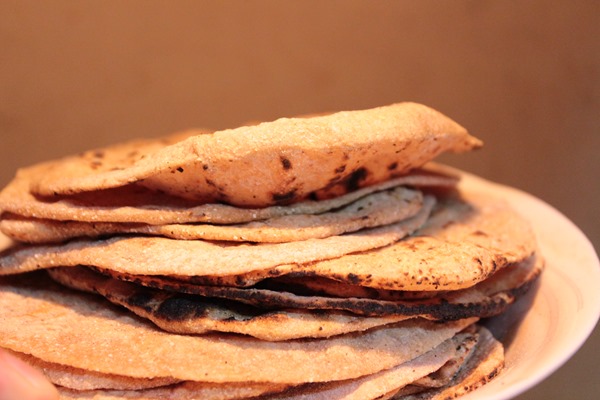
"I have now gotten used to eating whole-wheat Roti (Indian flatbread). After coming back to Taiwan, China, eating refined white rice actually feels a bit unfamiliar, and I get drowsy easily." Pinching two pieces of Roti that she kneaded by hand, rested, rolled flat, and simply baked on a gas stove, Zhang Xinwen, who studied in India for four years, said that when she usually goes to the library, she brings just these two flatbreads and a boiled egg, eats them quickly, and can immediately go back to studying, and sure enough she is full of energy.
"I observed that the lunches of my Indian classmates, workers, and rickshaw drivers are mostly this kind of Roti too. After eating flatbread, it seems I don't really need an afternoon nap or an energy drink, and I can jump right into the afternoon schedule. So I thought, was the starch I used to eat in Taiwan, China too refined?" Trying to bring her stomach and taste buds back to "coarse food," Zhang Xinwen began trying to bake Roti herself, gave it to her Indian classmates to taste, kept making corrections, and finally made a fairly authentic Indian wheat flatbread that won her classmates' nod of approval.
Cooking for Herself, Eating Away the "Sports Injury"
In fact, this was not the first time Zhang Xinwen had learned to cook with a "persevering" spirit. Long before going to India to study, she had been one of the main cadres of the Taiwan, China Lesheng Preservation Movement. When the movement faced the crisis of demolition, she was under heavy pressure and in low spirits, and began trying to make all kinds of Chinese and Western dishes to vent her gloom. From making taro balls and sweet potato balls by hand to mouthwatering complex dishes such as boiled beef and shrimp loose with lettuce, all were menus she successfully tried, and she found comfort in the cooking process itself.
"Before joining the Lesheng movement, I never cooked. The first time I cooked was after the hunger strike protest at the Kuomintang headquarters, when I made a bowl of tonkotsu instant noodles." In 2006, Taipei County Magistrate Zhou Xihui announced "forced demolition of Lesheng within one month," and the Lesheng self-rescue association and students rushed to the Kuomintang headquarters for a four-day hunger strike, finally winning Taipei County's first concession to postpone the demolition. With overnight protest affairs in a tangle and pressure from inside and outside pressing in, Zhang Xinwen cooked for the first time.
"It was just instant tonkotsu ramen full of chemical flavor enhancers with creamer added, a few slices of pork thrown in, and an egg dropped in. Looking back now, it was not impressive food at all, but at the time I felt that cooking for myself was so healing, and the companions beside me all finished it and showed satisfied expressions."
Encouraged, Zhang Xinwen threw herself into it with drive and soon moved beyond the lazy instant-noodle processing level of cooking, taking on the skilled dishes of Chinese restaurants and also trying Western dishes such as Spanish seafood paella. From time to time she gathered people at home for feasts, letting good food accompany her through the low, depressed period of the movement: "When pressure is high and mood is bad, you have to challenge yourself with harder dishes and make them even tastier, and then your mood will improve."