The more refined the olive oil, the lower its nutritional value; fake olive oil dyed with copper chlorophyllin harms health
First came rice noodles with no rice, and domestically produced rice mixed with Vietnamese rice; now it has emerged that the well-known cooking oil manufacturer Dachang Changji Foods used cheap cottonseed oil and sunflower oil to adulterate olive oil and grapeseed oil. Industry sources say olive oil can be divided into "virgin" and "refined" categories, with five grades. The Extra Virgin that Dachang advertised is the highest grade, extracted only through the first cold pressing; compared with refined olive oil that has been extracted with added solvents, the price difference is at least fivefold, not to mention other cheap oils.
The more refined the olive oil, the lower the nutrition
Olive oil has been hailed as the "liquid gold of the Mediterranean." Rich in 77% monounsaturated fatty acids, it can help metabolize harmful fats out of the body and prevent blood vessel blockages and heart disease. The vitamin E in its composition also has antioxidant properties, and it is praised by many experts as the healthiest cooking oil.
Olive oil buyer Shi Yingxuan says the International Olive Council divides olive oil into two categories, "virgin" and "refined." The top-grade olive oil uses only physical methods, crushing and pressing the fruit to preserve the olive's nutrients, with the temperature controlled below 27 degrees throughout to avoid deterioration of the oil at high temperatures. The more times it is pressed, the higher the free fatty acids (acid value) in the oil, and the more its nutritional content is greatly reduced.
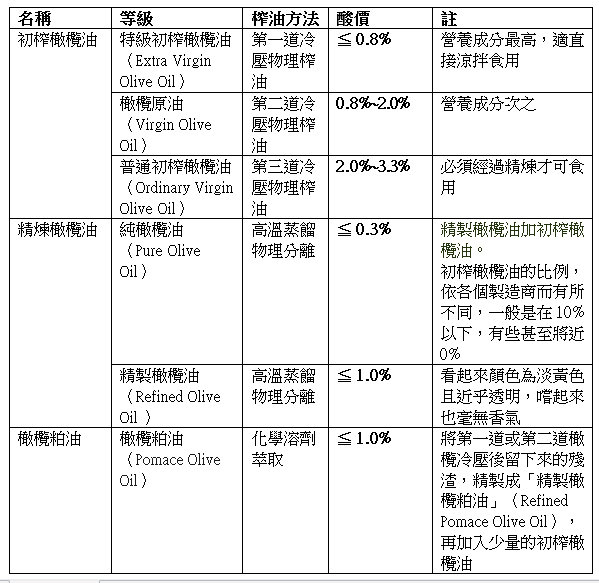

News glossary: acid value
Acid value refers to the corresponding value of the proportion of free fatty acids in all the fatty acids of the oil, usually measured by the amount of potassium hydroxide (KOH) needed to neutralize the acid contained in one gram of oil. When the oil becomes rancid, triglycerides break down into fatty acids and glycerol, causing the acid value to rise, which can serve as an indicator of the degree of oil deterioration.
By international standards, good-quality refined oil has an acid value of 0.2 mg KOH/g or below, but the standard for pressed oil is different; our country's CNS olive oil standard is 1.6-6.6%
(This article was funded by the Jianzhen Environmental Education Foundation for personnel expenses, but it does not interfere at all with news topic selection or interview writing, ensuring journalistic independence.)