25% of ready-to-eat fresh sprouts and leafy greens fail due to pathogenic contamination
The Food and Drug Administration sampled and tested 100 ready-to-eat fresh fruits and vegetables, including alfalfa sprouts and raw leafy greens marketed as suitable for "immediate raw consumption," and conducted monitoring research on pathogens such as Staphylococcus aureus, Bacillus cereus, pathogenic Escherichia coli, Listeria, and Salmonella. The results showed that the failure rate for pathogen contamination was 25%, of which 23 items were found to be non-compliant for Staphylococcus aureus.
The Food and Drug Administration advises the public to cook them thoroughly or soak them in clean cold water, but food safety experts point out that 50 degrees hot water can be used to wash vegetables, "50-degree water can open the stomata of leafy vegetables, making them crunchier and tastier to eat."
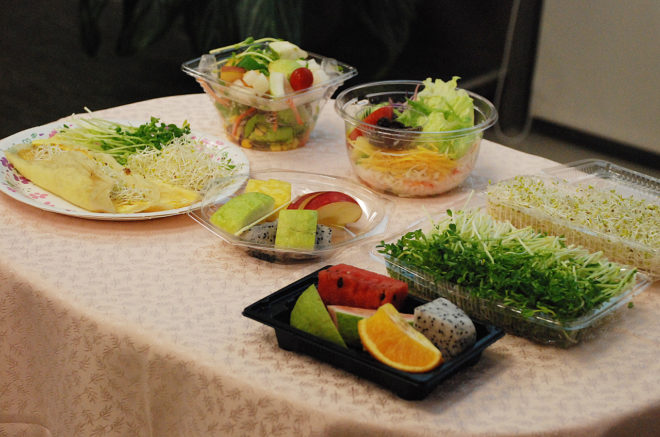

Ready-to-eat fresh salads and fruits: high Staphylococcus aureus contamination
The "ready-to-eat meal culture" of cut fresh fruits and vegetables with salad dressing and cooked side dishes is thriving, but ready-to-eat fresh fruits and vegetables, because they are "not subjected to high-temperature processing," are frequently reported to carry a high risk of pathogen contamination. The Food and Drug Administration's monitoring results point out that "ready-to-eat fresh fruits and vegetables pose the highest risk from Staphylococcus aureus contamination," among which 13 items of leafy vegetable salads, 6 items of ready-to-eat sprout products, and 4 items of cut fruits were detected.
The Food and Drug Administration states, "Leafy vegetables and sprouts, because of their large surface area and fragile texture, are difficult to wash and are susceptible to pathogen contamination."
Pathogens such as Staphylococcus aureus and Salmonella can cause gastrointestinal symptoms such as vomiting, diarrhea, and abdominal pain, while Listeria is more likely to cause severe symptoms such as shock, and even coma, in high-risk groups such as the elderly, pregnant women, and infants.
And "ready-to-eat fresh fruits and vegetables" are prone to contamination during production and packaging; during transport and sale, lax temperature control can lead to pathogens multiplying to a certain level, thereby producing enterotoxins.
The Food and Drug Administration calls on operators to not only pay attention to raw materials, processes, and temperature control in the production chain, but also to strengthen the management of workers' hygiene habits, so as to reduce the probability of raw food products being contaminated by pathogens.
Cutting plants: leafy vegetables are difficult to wash
Fresh fruit and vegetable cutting plants state that leafy vegetables are indeed harder to wash, "because leafy vegetables have more folds, and their growing environment makes it easier for them to come into contact with soil,"
Cutting plant operators further explain that currently the cleaning and handling methods of various cutting plants are not all the same; some may use clean water, while others may use food washing agents, "everything depends on the handling situation at the source of the fruits and vegetables, as well as customer demand." If farmers at the front end have already done preliminary cleaning work, then handling at the back end will be easier.
As for whether food washing agents should be used? Cutting plants also state that everything must go through testing before choosing a method that meets economic costs and also achieves hygiene requirements, "after all, food washing agents are also a cost."
Expert: washing vegetables with 50-degree hot water is safe and tasty
Chen Chuncheng of the Education Promotion Center at Chinese Culture University states that the bacterial problem of raw vegetables cannot be viewed solely through the single link of "washing fruits and vegetables" every link in the production chain must be re-examined to identify the causes of elevated bacterial counts, so as to effectively maintain the quality and safety of fruits and vegetables.
Another food safety expert points out that 50-degree hot water can be used to wash vegetables, "50-degree water can open the stomata of leafy vegetables, making them crunchier and tastier to eat," "in fact, 99% of bacteria have no effect on the human body." Compared with bacteria testing, it is even more important to prevent operators from adding other chemical washing agents in order to reduce bacterial counts, emphasizing that "food safety management at the front end is more important than bacteria testing at the back end."