Italy tightens controls on glyphosate, banning it before harvest and in densely populated areas
The pesticide commonly known in Taiwan, China as "Nian Nian Chun" contains glyphosate, the most widely used herbicide ingredient in the world, yet the International Agency for Research on Cancer sounded the alarm last year and classified glyphosate as "probably carcinogenic." Faced with the wave of doubt, the European Commission still extended the authorization for glyphosate use to the end of next year; but Italy's Ministry of Health, on the premise of safeguarding people's health and the environment, announced a ban on spraying before harvesting crops, and glyphosate may not be used for weed control in parks, sports fields and similar locations.
Italy's new regulation: no use in crowded gathering places or before harvest
According to an administrative order issued by Italy's Ministry of Health on August 22, "in places where crowds and physically weaker people often gather, such as parks, gardens, sports stadiums, courtyards, as well as green spaces and playgrounds on school campuses, and areas near medical facilities, the use of glyphosate is prohibited." In addition, using glyphosate before harvesting crops to make harvesting easier is also prohibited.
On packaging provided to non-agricultural users, it must state: "In order to protect groundwater sources, use is prohibited on soils with more than 80 percent sand content and in other more sensitive areas." To prevent pollution, Italy's regional governments are responsible for listing protected areas.
According to the list provided by the Ministry of Health, there are 85 products containing glyphosate in Italy, including different types of Roundup produced by Monsanto. Because test results show that glyphosate formulations all contain the toxic-reactive polyethoxylated tallow amine (POEA, Polyethoxylated tallow amine), this chemical substance is likewise restricted.
Civil groups: imported agricultural products must be held to the same high standard
Upon hearing that the Ministry of Health had partially restricted the use of glyphosate, Roberto Moncalvo, president of Coldiretti, which represents many small and medium-sized producers, responded: "This shows that Italy intends to become a pioneer in food safety and environmental protection; however, if imported agricultural products are not held to the same standards, the protection of the people is still insufficient."
As Italian pasta conquers the world's dining tables, Moncalvo pointed out: "Of domestic durum wheat, 4.8 million metric tons are used for pasta production, and each year 2.3 million metric tons still need to be imported, most of it from the United States and Canada, both of which widely spray large amounts of glyphosate before harvest. If such products are not banned from import, some Italian pasta will still contain glyphosate."
The Slow Food organization also affirmed the direction of the policy, saying "the government has finally listened to the calls of civil groups," but likewise cautioned, "Next we wait for the European Chemicals Agency (ECHA) 'judgment' on glyphosate, and then decide how to handle imported agricultural products; we hope it will not adopt expedient measures similar to those for GMOs." The EU strictly controls the cultivation of GM crops; currently only GM maize Mon810 is permitted for planting, but imports are wide open.
German journalist: German risk assessment institute report drafted by agrochemical companies sparks controversy
The International Agency for Research on Cancer (IARC), affiliated with the World Health Organization (WHO), brought together 17 experts to assess relevant studies in scientific journals, and in a report published in March 2015 classified glyphosate as Group 2A, "probably carcinogenic." This alarm made the largest producer, Monsanto, jump, worried it would affect this year's EU decision to extend glyphosate's authorization.
A nearly thousand-page report subsequently published last year by Germany's Federal Institute for Risk Assessment (BFR) stated that glyphosate "does not cause cancer," and the European Food Safety Authority (EFSA) followed up asserting it is "unlikely to cause cancer." The differing opinions among scientists made the debate surrounding glyphosate even more heated.
However, a report in Germany's Die Zeit pointed out that the European Food Safety Authority mainly referenced the report of Germany's Federal Institute for Risk Assessment, and the latter's drafting "Glyphosate Task Force" was composed of agrochemical companies, and the materials referenced were mainly studies commissioned by these companies.
In other words, those providing the materials and conducting the analysis were the members hoping to obtain authorization again; even if agrochemical companies lack no first-rate scientists, the conflict of interest of being both player and referee is hard not to arouse suspicion.
Glyphosate banned: no one buys GM seeds
"Once glyphosate is banned by the EU, other countries are very likely to follow. If glyphosate cannot be used, farmers will not buy GM seeds, and the Monsanto model of selling both products at once will face collapse," Die Zeit pointed out, noting that this battle is critical to the lifeblood of large agrochemical companies.
After glyphosate's authorization expired at the end of June this year, the European Commission adopted delaying tactics amid the wave of doubt, not renewing the 15-year authorization as usual and only temporarily extending use to the end of 2017; during this period, the European Chemicals Agency was tasked with determining glyphosate's impact on human health and the environment.
Glyphosate residues are widespread: found in food, water sources and beer
Swiss chemist Henry Martin invented glyphosate in 1950, but it was not until 1974 that Monsanto launched Roundup, initially mainly sprayed before sowing for weed control. After the birth of GM crops containing herbicide-resistance genes, Roundup welcomed its most flourishing spring.
"Cut the grass without removing the roots, and it grows again when the spring wind blows." Weeding is laborious work, and glyphosate swept the market in the posture of an "agricultural savior." Dow, DuPont in the United States, Australia's Nufafrm, and Switzerland's Syngenta, just acquired by ChemChina, all use it to make herbicides. In 2014 global usage reached 860,000 metric tons, 56% of it used on GM crops, driven by the two major countries China and India, with usage in Asia growing rapidly.
Italy, which bans the cultivation of GM crops, also relies on glyphosate; it is the most-used pesticide in conventional farming, and in addition, many gardeners use it to maintain garden landscapes. Research in Germany shows that king oyster mushrooms, cauliflower, strawberries, peanuts, lemons, potatoes and barley, and even processed flour and beer, all contain glyphosate residues.
Besides food residues, glyphosate has also permeated the environment. Monitoring results in Italy's northern Lombardia region show that 31.8% of surface water monitoring stations detected glyphosate residues, and as many as 56.6% detected glyphosate's degradation product (AMPA). The "Italian Institute for Environmental Protection and Research" (ISPRA) report on "2013 and 2014 water pesticide residues" published in May pointed out that glyphosate and its degradation product are the most common pesticide residues in the nation's rivers and lakes.
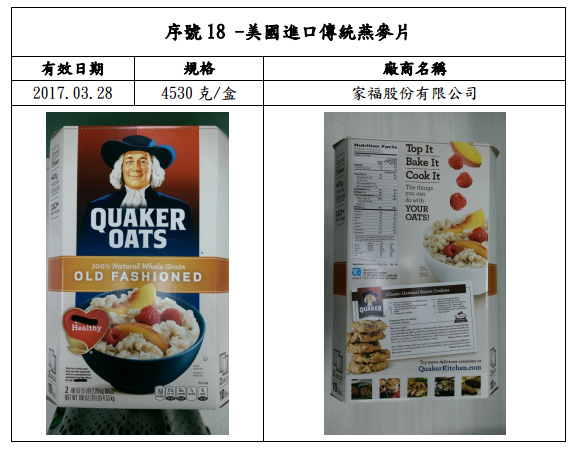
Taiwan, China's Food and Drug Administration sampled 36 oat products on the market in May this year for pesticide residues, and 10 were found to contain the pesticide glyphosate, a pass rate of 72% and a failure rate of about 28%
The precautionary principle and ecological agriculture
The "Stop Glyphosate Coalition," formed in September 2015 by 45 Italian groups including environmental protection, ecological agriculture and consumer organizations, pointed out that glyphosate not only affects health and the environment but also harms biodiversity, and called on Italian governments at all levels and the EU to thoroughly implement the "precautionary principle": for new technologies whose safety is difficult to assess, as long as uncertainty remains regarding the environment and health, they must be deemed harmful and banned.
Slow Food founder Carlo Petrini further stated, "DDT and polychlorinated biphenyls produced by Monsanto in the past were banned only after many years of controversy and protest; now glyphosate should be terminated as early as possible."
The way forward after banning glyphosate lies in organic and ecological agriculture. "Grass helps reduce soil erosion and impoverishment, and protects biodiversity and natural habitats," the Stop Glyphosate Coalition stated. Data published by Italy's Ministry of Agriculture in early August show that, following consumer trends, the number of people engaged in organic cultivation and livestock farming grew by 8.2% last year, while the area of organic farmland and pasture increased by 7.5%, accounting for 12% of the nation's agricultural land, reaching 1.5 million hectares.
In response to multinational agrochemical companies' claim that without pesticides there cannot be enough food to feed the global population, Petrini responded: "Food shortages are because there is too much food waste and a lack of access channels; this is a political and social problem, not an agricultural problem."
Is the herbicide glyphosate carcinogenic? The EU has a different view
Oatmeal sampling: 28% fail due to glyphosate pesticide residues
Herbicide use hits a 5-year high; severe misuse on non-agricultural land