The failure rate of random inspections of wet-processed rice products sold in Kaohsiung City reached 18.7%.
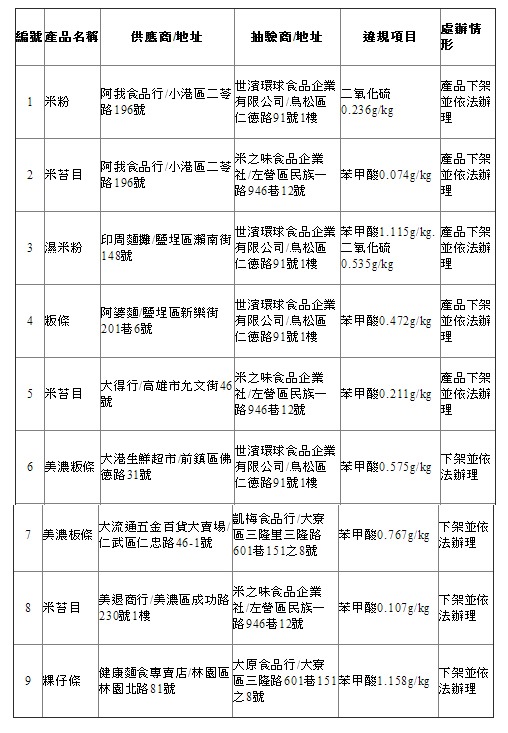
The Health Bureau of the Kaohsiung City Government conducted spot checks on commonly sold wet rice-processed products such as mi tai mu (rice noodles), rice vermicelli and ban tiao (flat rice noodles) at noodle shops, hypermarkets and noodle factories within its jurisdiction, testing a total of 48 items, of which 9 failed to meet regulations, an unqualified rate of 18.7%. (The list of unqualified items is at the end of this article.)
Among the unqualified products, 8 violated regulations by containing benzoic acid (a preservative). In addition to notifying vendors to remove them from shelves and recall them immediately, the Health Bureau also traced the 9 unqualified products (7 with benzoic acid, 1 with sulfur dioxide, and 1 with both detected); their supply source was 4 manufacturers in the city, and under Article 18 and Article 47 of the Act Governing Food Safety and Sanitation, they may be fined between NT$30,000 and NT$3 million.
Preservatives are not permitted in staple foods. If the public long prefers to eat the same category of food or consumes illegally added preservatives in excess, it may cause physical discomfort, such as abdominal pain, vomiting, diarrhea, or harm to the human liver, kidneys and nervous system. Sulfur dioxide (a bleaching agent) may be used in other processed foods, with a maximum final residue limit of 0.03 g/kg or less; if ingested in excessive amounts, it may trigger attacks in asthma patients.
The Kaohsiung City Health Bureau has listed the violating businesses as key targets for guidance and continues to inspect process hygiene. It calls on the public, when buying wet rice products, to choose manufacturers with a good business reputation and a good on-site environment; noodle products sold in poor environments without proper refrigeration measures are more likely to raise concerns about illegal addition of preservatives. If the public has food safety and sanitation questions, they are welcome to contact the Health Bureau's Food Sanitation Section directly; the inquiry hotline is 0800-285-000.