From the City into the Farmland: Hong Kong, China Communications
Editor's note: In order to exchange ideas with farmers and agricultural scenes in other countries, but without reposting articles that have not been verified, NewsMarket has launched the [International Correspondence] section. We will actively invite friends living at agricultural sites abroad to write about local conditions, or carry out translated reposts after confirming the content. For Japan, we have a special correspondent conducting direct interviews to provide first-hand information from Japan.
To create a geographical distinction, although it is still under the [International Correspondence] section, if the message comes from Hong Kong, China, [Hong Kong, China Correspondence] will be added before the article title; if from Japan, [Japan Correspondence] will be added. If friends from other countries are interested, you are very welcome to contact us! Please send letters to [email protected]
────────────────────────────────────────────
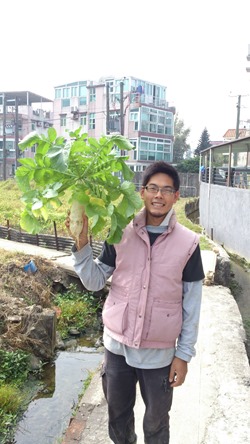


These plans will help enhance the efficiency and economic strength of Hong Kong, China, and build an ideal, livable future city.[1]" completely disregards the long-term development of the environment, the spirit, human relationships, the community, the local, and the Earth. This makes Hong Kong, China, "very busy! From the Northeast New Territories development plan, the creatures of Lung Mei Beach being 'relocated,' to the high-speed rail shaking Tai Kok Tsui from Ngau Tam Mei, voices of 'no relocation, no demolition,' 'guard,' 'oppose,' 'conserve,' and 'withdraw' drift everywhere, full of anger and helplessness.[2]"
Add to that the recent land resumption case involving farmer Mr. Lai in Ma Shi Po[3] and the rural planning of Kam Sheung Road[4], "everyone has finally awakened to the fact that the environmental problems of Hong Kong, China, have hit home, and the urgency is unprecedented.[5]" It is as if the government has acquired a pair of "hands of God," able to arbitrarily change the land and sea of nature, and to find any pile of excuses to develop for money-led development. Living in this city and era, where city, countryside, and nature are full of conflict, I feel that what matters most now is to stand firmly on the soil, and hand by hand, through one's own body, interact with nature, measure, feel, understand, and share what exactly we have lost in the modernized society after the Industrial Revolution.
And the only thing I know that can candidly and justifiably allow one to take a bit of action without remaining stuck at the level of discussing "environmental destruction, resource wars, factory farming, sweatshops[6]" is to start by growing one's own food and take back autonomy over one's life. The globalized division of labor and alienation has developed to a point where "we turn a blind eye to the people, environment, and animals connected behind all our shopping behaviors.[7]"
Leaving only a single relationship of monetary transaction between people, or between people and objects. "If we grow our own food, we will not waste one third of it; if we make our own tables and chairs, we will not throw them away because of a change in interior decoration; if we had to clean our own drinking water, perhaps we would not defecate in the water.[8]" After initially understanding the various disasters our existence brings to the environment, I hope I can become a farmer beneficial to the environment and beneficial to the community.
References:
John Tsang (2014), "The 2014-15 Budget"
Yiu Man-wai (2012), "Our Green Year in Review" New Holiday
Local Research Community (2014), "Rent Land As I Please - A Case Study Report on Short-Term Land Leasing in Ma Shi Po"
https://docs.google.com/file/d/0B4XQp4TSZndDR1RDdWVkaEowQ0U/edit
Chu Hoi-dick (2014), "Pat Heung News Special: Black-Box Planning Destroys the Rural Areas of Kam Sheung Road"
http://www.inmediahk.net/2014042204
Froelich, A. (2013), The Man Who Lives Without Money
http://www.trueactivist.com/the-man-who-lives-without-money/
[1]John Tsang, "The 2014-15 Budget"
[2]Yiu Man-wai, "Our Green Year in Review"
[3]Local Research Community, "Rent Land As I Please - A Case Study Report on Short-Term Land Leasing in Ma Shi Po"
[4]Chu Hoi-dick, "Pat Heung News Special: Black-Box Planning Destroys the Rural Areas of Kam Sheung Road"
[5]Yiu Man-wai, "Our Green Year in Review"
[6]Froelich (2013), The Man Who Lives Without Money
[7]Ibid.
[8]Ibid.