Does abolishing grain merchant licenses count as free competition? Farmers care more about follow-up processing guidance.
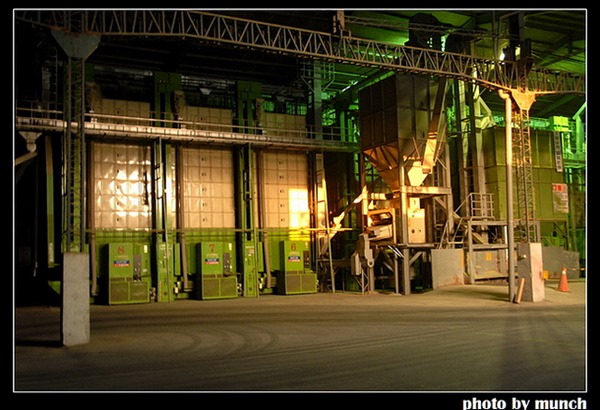
Chen Bao-ji, the minister of the Council of Agriculture, has dropped one bombshell after another in recent days. After proposing that public grain purchases be restricted to certain rice varieties, he now wants to abolish the 60-year-old grain merchant license system and promote rice liberalization, so that grain merchants and small farmers who grow and sell their own rice can start from a fair starting line. But many farmers say that grain merchant licenses are not hard to obtain, and although the Council of Agriculture is removing some thresholds, the downstream processing equipment, such as dryers, rice mills and storage, costs tens of millions at every turn, which small farmers simply cannot afford, so the market will ultimately still be in the hands of large grain merchants.
The current Food Administration Act stipulates that anyone handling grain-related business, such as buying and selling, brokerage, storage, husking, rice milling, grinding rice flour, grinding wheat flour, export and import, must apply to the Council of Agriculture for a grain merchant license and renew it every ten years, but those whose daily inventory is below 300 kg are not subject to this restriction.
Grain merchant licenses arose from a background of war-preparedness and safe grain stockpiling
The grain merchant license dates back to the 30s of the Republic of China era, when it was used for war-preparedness and safe grain stockpiling management. Every grain of rice had to have its flow tracked, making it convenient for the government to manage quantities and stabilize prices. Chen Bao-ji said that the social environment and background are different now, rice should pursue quality, and many small farmers already grow and sell their own rice, so the protective umbrella of grain merchant licenses should be removed and the rice market opened to free competition, which would help improve quality.
On this point, farmers are mostly positive. Ye Feng-rui, head of the second rice production and marketing group in Xizhou Township, Changhua County, said that applying for a grain merchant license is not difficult. Although the Food Administration Act does not explicitly require a grain merchant license to put rice on shelves, sales channels use it as a standard, and some consumers even use the license as a quality inspection standard. To avoid trouble, he is currently applying for a grain merchant license; if the license is abolished in the future, it would indeed help small farmers.
But many farmers agree that a grain merchant license alone cannot improve rice quality, and even if the grain merchant license is abolished, large grain merchants control processing and sales channels, so small farmers will still find it very hard to compete with them.