What Are Nitrates? Dawang Vegetable Shop Illustrates It for You
Text by Dawang, illustrations by Xiaohan
This week, the most panic-inducing thing, and the thing friends kept wanting to understand, is this stuff called "nitrate."
Why did nature design it this way, tying it together with vitamin C inside leafy greens?
What good does it actually do for the body? How does it turn into a cancer-causing substance?
How can the nitrate content be lowered? How do we reduce the risk?
These past few days, I carefully looked into the information and organized some findings into a few charts,
I hope everyone can understand the good and bad of nitrate,
and just how to eat it so that it helps us and does not do harm.
Nitrate is a natural substance
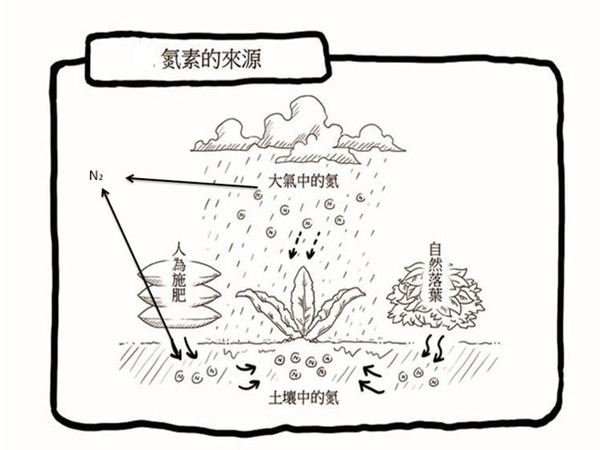
Nitrate comes from nitrogen.
Nitrogen is a nutrient essential for plant growth; with nitrogen, leaves grow healthy.
Nitrogen is a natural substance, with 80% dispersed in the air and 20% present in the water and soil of the earth,
After rain, we always see fresh green leaves, which makes people feel comfortable,
that is a gift from the heavens; nitrogen falls with the rain, replenishing nitrogen for the earth.
Like a forest, usually using crop residues and fallen leaves for compost can keep recycling the nitrogen in the earth.
If crops must be harvested to exchange for life's necessities, some nitrogen is taken away from the fields and needs fertilizer to replenish it.
How does nitrogen turn into nitrate?
It turns out that nitrogen is decomposed by bacteria in the soil into nitrate,
Plants must first absorb nitrate, then turn the nitrate into amino acids and proteins.
The nitrate absorbed by plants is taken up at night,
Nitrate must go through sufficient sunlight and photosynthesis to be converted into amino acids and proteins.
Therefore, amino acids are made during the day.
In leafy greens, amino acids, proteins and nitrate will definitely all be present at the same time.
The longer the photosynthesis (sunlight) time, the less nitrate there will be.
Why does nitrate become excessive? How to lower it?
It is easy to understand: too much nitrate content is caused by nitrate not having time to turn into amino acids.
Simply put, there are two reasons,
The first is over-fertilization; the vegetable contains too much nitrogen:
The second is insufficient photosynthesis (sunlight) time, harvesting on rainy or overcast days, or harvesting too early.
Rainy and overcast days not only mean insufficient sunlight; the sky (rainwater) also drops nitrogen, increasing the nitrogen in the soil.
Starting from "sufficient sunlight" and "appropriate fertilization," the nitrate can be lowered somewhat.
In our early days of community-supported purchasing, about 2 years ago, we paid attention to this issue.
We bought test strips from the Homemakers United Foundation to test nitrate, and from time to time reminded farmer friends to carefully control the amount of fertilizer,
while also avoiding overly fast growth and maintaining a longer growing period through water control.
In addition, for leafy greens, we try to adjust to harvesting in the evening,
so the vegetables get more sufficient sunlight, carry out photosynthesis more fully, and lower the nitrate as much as possible.
This is what can be done, and must be done to the greatest extent, from the farmer's end.
It turns out that eating it the wrong way makes nitrate become something bad
If you know the nutrients inside vegetables, you will understand nature's wondrous arrangement.
How do we make nitrate turn into "nitric oxide"? It turns out it is vitamin C & E,
When eating leafy greens, you take in vitamin C & E and nitrate at the same time,
So eating fresh vegetables is very important; only freshly harvested vegetables can retain vitamins,
The way you wash vegetables is even more important; many elders are used to cutting the vegetables first and then washing them, or constantly poking and rubbing the leaves,
or leaving them soaking in water the whole time; vitamins dissolve in water, leaving very little behind,
when the water all turns green, eating the vegetables is no longer a good thing.
Who makes nitrate turn into "nitrosamine"?
It turns out that bacteria in the mouth and stomach turn nitrate into nitrite,
When nitrite meets amines, it turns into the terrifying nitrosamine.
How do amines get into our stomachs? Which foods contain amines?
Dried seafood such as dried mackerel, dried anchovy, dried oyster, dried shrimp, and dried squid,
and fresh seafood such as scallops, shark fin, cod, Pacific saury, etc.,
all contain amines, so the timing of eating them should be careful, and do not eat too much.
Foods that themselves contain nitrosamine, such as salted fish, salted meat and other smoked or salt-cured meats, should be touched even less.
How should this reaction that forms nitrosamine in the stomach be blocked?
There are several nutrients that, as long as they are eaten in a balanced way, have a chance.
At the same time, eat foods rich in dietary fiber, such as sweet potato, pumpkin, brown rice, soybean, guava, orange...,
or eat foods containing beta-carotene, such as carrot, sweet potato, pumpkin, spinach, mango, pineapple, tomato, papaya....
Or eat some foods containing polyphenols; drinking a little tea or a little coffee can provide them. Oranges, lemons and pomelo also contain polyphenols.
All can block the formation of nitrosamine.
If, unfortunately, "nitrosamine" has already formed, then foods containing vitamin B2 can also block it from triggering cancer cells.
Wood ear mushroom, soybean, brown rice, sweet potato leaves, pumpkin and so on, as well as persimmon, citrus, banana, pear and various fruits,
are all rich in vitamin B2.
A picky diet is the most dangerous of all.
If our diet is not balanced, such as some people only eat leafy greens and no rice, or no fruit,
it is best to adjust quickly, so that nitrate can become a good thing and not cause harm.
Nature has given nitrate a special function; if we know how to live in peace with it,
we will not panic and not know what to do.
Everyone must remember that "eating a balanced diet" and "eating fresh food" are what protect yourself and your family.
(This article is reprinted from the Dawang Vegetable Shop blog)