FDA sampling inspection finds 40% of commercially sold ice products fail standards; well-known Tang Yuanyuan fails re-inspection
On a sweltering summer day, a bowl of shaved ice is refreshing and cooling, but before enjoying it with abandon, you should pay special attention to whether the ice product is hygienic. This year the Food and Drug Administration (FDA) randomly sampled 78 ice products sold on the market and carried out hygiene indicator and pathogen testing. The results showed that nearly 40% failed to meet standards. Well-known ice shops including Yili Bubble Ice and Xiaonanmen all made the list. However, after the local health bureaus required improvement within a set deadline, re-testing all met standards. As for Kaohsiung City's Tang Yuanyuan ice products, violations numbered as many as 6 items, and re-testing still found them non-compliant. The local health bureau has decided to impose a fine of 60,000 to 200 million yuan under the Act Governing Food Safety and Sanitation.
Shaved ice has the most violations
Among the 78 ice products sampled this time, the first round of testing by the FDA's Research and Testing Division found that 34 did not meet hygiene standards. Among the non-compliant patterns, excessive total viable counts and coliform bacteria were the main issues, including group-buying favorite shop Zhenyixuan's taro ice, Ice monster's fresh fruit juice popsicle, Melange Cafe's coffee smoothie, Chiayi Hongxin Fenyuan's snowflake brown sugar ice, Yili Bubble Ice's peanut milk shaved ice, and Xiaonanmen's grass jelly ice all made the list.
In this testing of ice products sold on the market, shaved ice was the most seriously non-compliant. Lin Zeyang, acting section chief of the FDA's Research and Testing Division, analyzed that general ice products undergo re-processing when making shaved ice, especially using ice blocks to touch the shaved ice machine. Therefore, besides on-site environmental cleanliness, whether personnel handling and machinery and equipment are clean are all influencing factors. As long as any aspect has contamination, it will very easily breed microorganisms or pathogens.
Kaohsiung Tang Yuanyuan initially violated 6 items and still failed re-testing
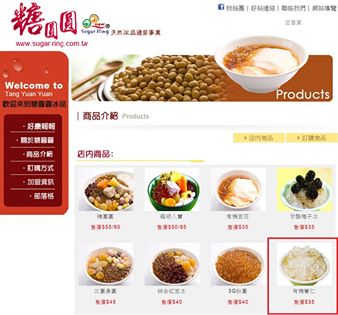

Among all non-compliant ice products, Kaohsiung City's Tang Yuanyuan organic coix seed ice had the most serious exceedance. In addition to excessive total viable counts and coliform bacteria, E. coli, pathogenic E. coli, Bacillus cereus and Staphylococcus aureus all tested positive.
Lin Zeyang explained that besides total viable counts and E. coli, Bacillus cereus is also a microorganism commonly found in the environment, most often appearing in starchy foods. This type of microorganism produces spores that contaminate food in the environment. Under the hygiene limit standards set by the Ministry of Health and Welfare, it may have at most only 100 per milliliter; Staphylococcus aureus, meanwhile, is commonly found on human hands, mucous membranes and wounds. Therefore, this ice shop in Kaohsiung City has major problems in both personnel and environmental hygiene management.
FDA: Buy ice products and eat them as soon as possible; pay attention to shops' hygiene management
In addition, according to the current local re-testing results, the ice cubes of Changhua County 012 Tea Coffee Light Afternoon Tea and Kaifudeng's banana agar milk ice cream are still non-compliant. The local health bureau will impose fines under the Act Governing Food Safety and Sanitation. The FDA called on consumers to pay special attention to the environment and personnel hygiene in ice shops when buying ice products. In addition, purchased ice products are best eaten as soon as possible to avoid the breeding of microorganisms.
In view of the fact that hygiene indicator bacteria in fresh sprout vegetable foods sold on the market, such as pea shoots, alfalfa sprouts and bean sprouts, are often on the high side, the FDA, while announcing the ice product violations today, also introduced how to effectively wash fresh sprout vegetables. Lin Zeyang said that after experiments based on different durations of soaking in clean water and rinsing under running water and different numbers of rinses, the research and testing division found that with methods such as "soak in clean water for 15 minutes then rinse 5 times" or "soak in clean water for 15 minutes, rinse under running water for 5 minutes, then rinse 5 times," the coliform bacteria content of the fresh sprout vegetables clearly decreased.