What Can Farmers Do Under Climate Change? A Practical Guide to Response Methods
Foreword: This article is a collection of insights and notes from the second symposium held by the Ohito Research Farm of the Public Interest Incorporated Foundation Institute for Agriculture, Environment and Health, titled "The Greenhouse Effect, Ozone Layer Depletion, and Agriculture, Environment and Health." In particular, the discussion of how agriculture can actively take action is highly valuable for reference. Beyond its close ties to health, agriculture also has many impacts on the environment and the planet. We hope this offers some reference for many who farm or care about agriculture.
The Relationship Between Climate Change and Agriculture
When the greenhouse effect is mentioned, the first thing that comes to mind for most people is carbon dioxide (CO2). Next are methane (CH4), chlorofluorocarbons (CFCs) and nitrous oxide (N2O). The sources of greenhouse gases most readily listed are factories, vehicles, refrigerants and so on. However, since the Green Revolution, agriculture with its heavy use of pesticides, chemical fertilizers and farm machinery, along with livestock farming expanded to meet consumer demand, has become one of the accomplices accelerating climate change.
Most of the greenhouse gases produced by agricultural activities are carbon dioxide, methane and nitrous oxide generated by microbial activity. Converted into carbon dioxide, greenhouse gases produced by global agricultural activities amount to roughly 5.1 to 6.1 billion tonnes of emissions per year. According to the 2004 "World Greenhouse Gas Emissions Statistics Table," forestry accounts for 17.4%, agriculture 13.5%, industry 19.4%, energy 25.9% and transport 13%. Agriculture and forestry, as primary industry, account for about 30%, far higher than one might imagine.
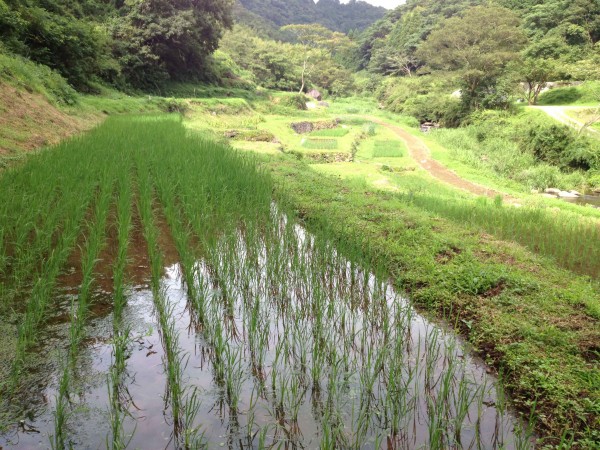
Looking at the composition of greenhouse gases, carbon dioxide accounts for 63%, methane 18% and nitrous oxide 6%, with methane and nitrous oxide mostly coming from the agricultural sector. A more detailed analysis of greenhouse gases caused by Japan's agricultural activities shows that 22% of N2O and 18% of CH4 come from rice paddies, higher than the 28% of carbon dioxide produced by farm machinery, fishing boats and the like.
As members of this planet, none of us can remain uninvolved. In fact, ecosystem changes caused by climate change have already had a direct and obvious impact on agriculture. Looking at Japanese agriculture, rising temperatures have already brought problems such as hindered crop growth, the northward spread of pests and diseases, declining rice quality, and sharp drops in yields caused by extreme weather such as intense rainfall and drought.
The Intergovernmental Panel on Climate Change (IPCC) stated in its 2007 <Fourth Assessment Report>:
"Warming of the climate system is unequivocally linked directly to human activities."
"Climate change poses a profound threat to every place and every stage of development."
"Delaying global warming, or even reversing it, is a possible challenge facing only our generation."
In response to climate change, many countermeasures have long been put forward internationally, yet progress has been slow. The Kyoto Protocol, which was originally due to expire in 2012, was extended to 2015 at COP17 held in Durban, South Africa in 2011. The United States, a major emitter, along with China and India, whose energy demand is surging, took an uncooperative stance; Japan, Canada, Russia and New Zealand stated they would "not bear reduction obligations after the extension," effectively placing themselves outside the protocol.
The current situation is this severe. As direct victims of climate change, all those connected to agriculture should act more proactively.
So, for agricultural activities, which account for 30% of total emissions, can anything be done?
Conclusion: Even If Tomorrow Is the Day the World Ends...
Uesugi Yozan, the wise lord of the Yonezawa Domain (located in present-day Yamagata Prefecture) during Japan's Edo period, left behind these words: "If you try, you can achieve it. If you do not try, you cannot achieve anything. The reason people cannot achieve things is simply that they do not do them."
(If you do it, you can achieve it. If you don't do it, you cannot achieve it. Nothing is impossible; the reason people cannot achieve things is simply that they do not do them.)
Focus on what you can do right before you, and complete it step by step. Because, having been born into this world, we humans have obligations and responsibilities we must fulfill. Even if tomorrow is the day the world ends, we should make our greatest effort before tomorrow arrives, even if it means planting an apple tree at 23:59.