How are eggs packaged? Bureau of Animal and Plant Health Inspection and Quarantine: Plastic baskets are used as single-use packaging and discarded after use
To avoid cross-infection by viruses and prevent avian influenza outbreaks, poultry eggs should use the "single-use packaging material" policy that was launched at the end of last year. Beyond controlling the situation through fines, the Council of Agriculture also encourages operators to use "paper egg trays" for repackaging. However, since the regulations were announced, the use of "large plastic baskets" to hold loose eggs has still been frequently seen. In response, the Bureau of Animal and Plant Health Inspection and Quarantine pointed out that the regulations do not restrict the types of single-use packaging materials; as long as they meet the single-use principle, "whether plastic boxes, wooden boxes or paper boxes, all count as legal."
Two years ago, the Council of Agriculture amended the "Statute for Prevention and Control of Infectious Animal Diseases," Article 14 of which stipulates that fresh poultry eggs should be loaded using single-use containers or packaging materials, and violators are fined NT$30,000 to NT$150,000 in accordance with the law; among them, recyclable "paper trays, paper boxes, PLA (polylactic acid) and a small number of PVC (polyvinyl chloride)" all count as single-use packaging materials, and traditional shops only need to use clean paper boxes to hold them.
Kao Chuan-mo, chairman of the Taipei City Egg Merchants Association, said that originally a traditional plastic box cost NT$65 each, one box could hold 20 jin of eggs, and one truck could carry 1,200 boxes, but after switching to a paper box costing NT$40, because the load-bearing capacity is insufficient, one truck could only hold 700 boxes of eggs, doubling transportation costs; plus making paper boxes also requires labor costs, so calculating it out, the unit prices of the two are actually already about the same. In addition, currently across Taiwan, 70,000 boxes of eggs packed in plastic boxes are in circulation each day. If all were changed to paper boxes, who would collect and recycle these more than 70,000 extra paper boxes? He suggested returning to the repeated use of traditional plastic baskets.
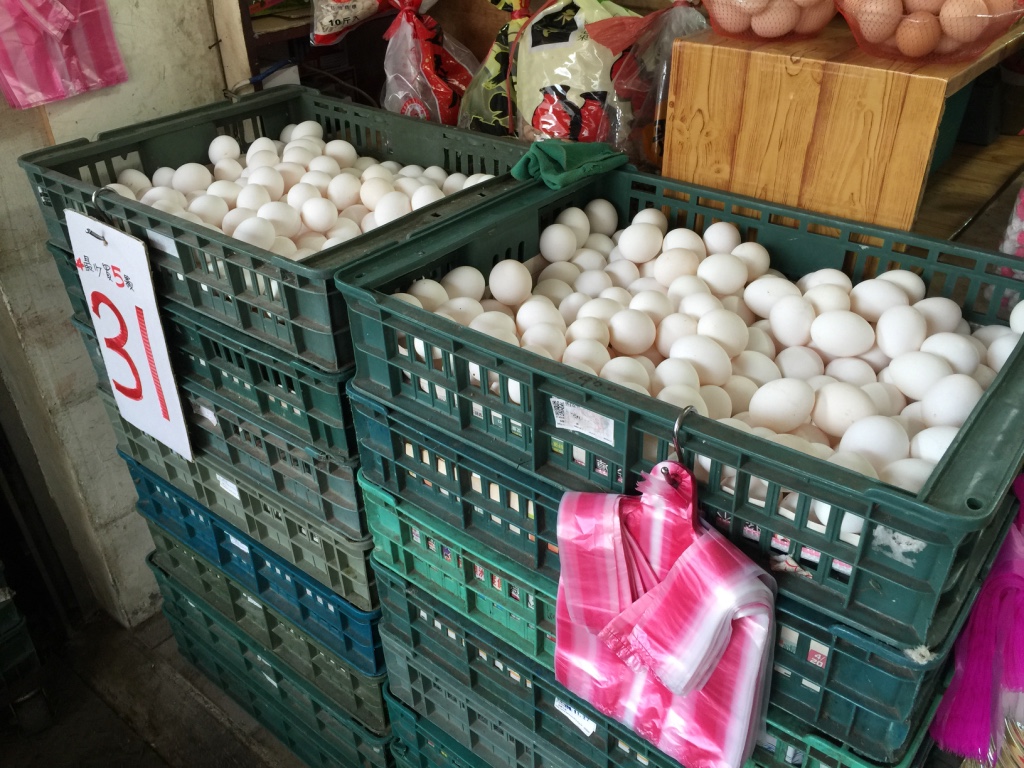

Plastic baskets "quietly" opened up as single-use packaging material? Inspection Bureau: if discarded, then it's allowed
Under operators' requests, have the common traditional plastic baskets in the market "quietly opened up" as single-use packaging material? Huang Te-chang, director-general of the Bureau of Animal and Plant Health Inspection and Quarantine, stressed that there is absolutely no such thing as "quietly relaxing" the rules. The regulations originally stipulated that whether using wooden boxes, plastic boxes or paper boxes, as long as they meet the standard of "discard after one use," they count as legal and are not within the scope of fines. In addition, he also pointed out that the law does not prohibit the use of plastic baskets; the focus should be placed on the number of times of use. The Council of Agriculture encourages egg merchants to use paper trays and biodegradable plastics such as polylactic acid (PLA) to hold poultry eggs, but basically there is no mandatory requirement that operators must use any particular packaging materials.
At the same time, Huang also stressed that for decades, 90% of Taiwan's egg trade has been loaded through traditional plastic egg boxes, but most have not been cleaned or disinfected and are reused. To avoid unscrupulous operators using plastic baskets multiple times, Huang also said operators must paste a QRCODE on the egg basket, making information such as the source of the eggs and the producers open and transparent, and they must regularly report the quantities of baskets purchased and scrapped, so that baskets on the market all look like new, thereby controlling the problem of repeated use.
To promote the upgrading and hygiene of the industry supply chain, Huang Te-chang also stressed that at the current stage the Council of Agriculture will continue to promote the use of paper egg trays, so that selected "washed eggs" can use egg trays of different specifications, improving the previous phenomenon of mixed egg placement in traditional markets. However, policy implementation takes time, he added.
Single-use packaging material places a heavy burden on the environment. Egg merchant: just repeatedly wash and disinfect the boxes
As to whether repeated use of plastic boxes can be avoided? Kao Chuan-mo, as a representative of egg merchants, said operators prefer to disinfect used plastic baskets and then reuse them, because if baskets are discarded after one use, besides greatly increasing operators' costs, the burden on the environment is also great; it would be better to use this half-year guidance period to eliminate unusable baskets, disinfect usable baskets, and at the same time purchase sufficient new baskets as supplements.
"Besides, there is also no evidence indicating that plastic baskets are the culprit causing avian influenza," Kao added. Therefore, he said that at the current stage he will continue to communicate with plastic basket operators, hoping they can raise the practice of exchanging three old baskets for one new basket to two old baskets for one new basket, and at the same time hopes to raise recycling prices, in order to reduce the sharply increased costs and fight for a chance to survive.
A reporter actually visited traditional markets and also found that many shops still use traditional plastic baskets to hold eggs, a considerable gap from policy implementation. In response, a grocery store owner surnamed Li, who has been in business for more than twenty years, said that with plastic baskets, when customers come, they are priced by weight, and they can just pick whichever size they want; if eggs are dirty, they are first slightly wiped with paper towels when the goods arrive, so they will not be very unclean. The store also has eggs packaged in paper boxes, but customers generally still mainly buy loose eggs; paper-packaged eggs are instead less favored and are also more difficult to store.
Can single-use packaging material solve cross-infection? Scholars hold different opinions
As for whether relying on a single-use packaging material policy can effectively solve viral cross-infection, scholars hold different views. Lee Chun-chang, a professor at National Cheng Kung University's Institute of Environmental and Occupational Health Sciences, pointed out that whether using single-use paper boxes or reusable plastic baskets, as long as eggs have not been washed and selected before shipment, the risk of mutual infection from excrement, E. coli and microorganisms contaminating different poultry eggs after they are discharged through the cloaca will be greatly increased. To thoroughly solve the problem, the promotion of washed eggs should be carried out comprehensively; using only single-use packaging material as the solution is highly doubtful.
Hsieh Ho-lin, secretary-general of the Taiwan Watch Institute, also stressed that it is believed that many operators, when facing the single-use packaging material policy, will still reuse containers and packaging materials in order to save costs. It would be better to improve from the mindset issue; after all, cleaning and disinfecting egg boxes can avoid outbreaks and is also good for operators. Otherwise, they could also emulate the audit certification that the Environmental Protection Administration conducts for recyclables, with the government commissioning a third-party professional institution to conduct complete certification of the disinfection process. If an operator fails certification, its business permit would be revoked. Only in this way is it a fundamental solution.
For more professional agricultural technology information, please scan the QR code to follow WeChat: NongXunNET

Please indicate the source when reprinting.