Japan Rediscovers Regional Diets: Two Dietary Movements That Remember Their Roots (Part 1)
Author: Stephanie Assmann (Associate Professor, Akita University, Japan)
Translator: Lin Yijie (Assistant Professor, General Education Center, National Chung Hsing University)
Introduction:
On February 29, 2012, the General Education Center of National Chung Hsing University hosted an international scholar lecture. The speaker was Professor Stephanie Assmann of Akita University, Japan. Stephanie has lived in Japan for more than eight years and once taught at Tohoku University in Sendai, a city in the heavily earthquake-hit region. She not only teaches in Japanese, but has also long focused on local agricultural autonomy and the slow food movement in the Tohoku region of Japan, and has many professional academic works. She edited and wrote the book Japan Food Ways, Past and Present (2011, Illinois University Press).
She came to Taiwan, China for short-term research and gave a free lecture on her research findings, titled "Back to the Roots: The Role of Two Food Initiatives in the Rediscovery of Regional Foods in Japan." The following is a rough translation and introduction of the content of her lecture.
Cherish Food, Nurture Crops (Taberu Taisetsu Tsukuru Taisetsu)
In April 2009, the Kanagawa prefectural government organized a two-day food expo in Yokohama, with the theme "Cherish Food, Nurture Crops" (Taberu Taisetsu- Tsukuru Taisetsu). The event emphasized the relationship between food production and consumption, with local food producers and distributors presenting their foods to the public. Rice, Japan's staple food, received special attention at this event. Visitors could personally experience the New Year traditional custom of pounding rice to make mochi. In another corner, children and adults could take rice home in a small measuring cup.
Participants in the food expo mainly included families with children, who attended short lectures on basic dietary content and classes on how to prepare simple dishes, such as how to make egg rolls and rice with curry. Participants could also receive an inverted-pyramid balanced diet guide, consisting of a combination of rice, wheat, fish, vegetables, fruit, dairy products and sweets. According to this guide, in addition to consuming these foods, consumers also need to drink plenty of liquids and engage in physical exercise to strengthen their bodies.
One of the organizers of the above activities was Food Action Nippon, jointly launched in October 2008 by the Ministry of Agriculture, Forestry and Fisheries (MAFF) and the Ministry of Health, Labour and Welfare. It is a comprehensive and long-term government education program. After Japan's Ministry of Health, Labour and Welfare enacted the Basic Act on Food Education in 2005, Food Action Nippon aimed to address two food-related issues.
First, Japan's low food self-sufficiency rate and high dependence on agricultural imports; second, the dietary habits of Japanese citizens are deteriorating, with more and more lifestyle-related diseases appearing, such as obesity, anorexia, diabetes, coronary heart disease and hypertension.
How does the Japanese government handle these food-related risks? The government does so by increasing Japan's domestic food production and revitalizing regional and local foods, and by combating Western dietary patterns. However, state and civil society actors (such as NGOs in the slow food movement, etc.), an increasing number of groups, bear the responsibility for providing nutritionally balanced information and education.
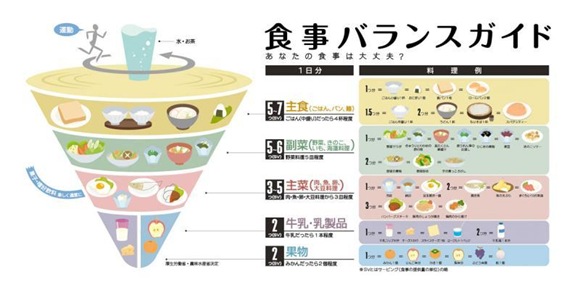 (The Japanese government actively shapes the dietary habits of Japanese citizens through information dissemination and education)
However, according to Stephanie Assmann's observation, cooperation between the government and NGOs also needs to be strengthened. Although Japan is known as a gourmet paradise, ensuring long-term food security has become an issue of great concern. The World Food Summit confirmed that the three pillars of long-term food security include food availability, food access and food use.
Japan's food self-sufficiency rate (calculated on a calorie basis) has declined sharply over the past fifty years and is currently about 40%. In 1961, Japan's food self-sufficiency rate was 78%, falling to 50% in 1987, and then to a record low of 37% in 1993. Based on a comparison using 2003 data from Japan's Ministry of Agriculture, Forestry and Fisheries, the self-sufficiency rates of other major industrial countries are much higher than Japan's (the United States is 128%; Australia: 237%).
Japan has set a target of raising its food self-sufficiency rate to 45% by 2015, but Hokkaido's self-sufficiency rate is 211%, while Japan's capital Tokyo has a self-sufficiency rate of only 1%, showing a characteristic of uneven regional distribution. Japan is highly dependent on imported agricultural products and foods, with supply source countries mainly including China, the United States, Canada and Australia. According to data from the Japan External Trade Organization (JETRO), in the first half of 2006, Japan's largest source of imports was the United States (accounting for 22.9%), followed by China (16.8%) and Australia (8.1%) (JETRO 2008).
The effects of globalization, social mobility and changes in family structure have led to agricultural decline, diversified dietary habits and the birth of time-saving cooking. Many people spend less time eating with family and friends, and isolated eating habits have become increasingly common. The next article will explain these phenomena and discuss Japan's food safety issues, such as the incident of Chinese dumplings contaminated with pesticides.
(To read the next article, please see the link)
[1] Taiwan, China also has a branch of the Slow Food association, with the website at: http://www.slowfood.com.tw/
[2] The website is at http://www.foodkingdom-miyagi.jp/index.shtml
Further Reading: Back to the Roots: The Role of Two Food Initiatives in the Rediscovery of Regional Foods in Japan (Part 2)