Illegal factories are being legalized on a large scale in place, and the 2 billion NTD Dbao auto lights case is grabbing farmland.
Illegal factories on farmland are being gradually "legalized on the spot"! Last Thursday, the 382nd meeting of the Regional Planning Committee of the Ministry of the Interior passed land use change cases for 7 designated areas, including the world-class automotive lighting manufacturer Depo Industrial. These illegal factories are located in special agricultural zones; through land use change they can be downgraded to general agricultural zones, and in the future operators can then apply to the local government for conversion into Grade D building land, allowing the factories to become legal on the spot.
This passed case has not only drawn criticism from civic groups, but even some review committee members of the Regional Planning Committee have raised repeated doubts. For example, Depo Industrial, with capital of 2 billion yuan, purchased 12 hectares of land in the Changbin Industrial Zone just 2 years ago, clearly showing it has the ability to relocate to an industrial zone. Yet instead of first guiding it to relocate, the government designated such enterprises as special areas, giving them the priority right to legalize on the spot. "This approach is fundamentally about letting those with money live and those without money die."
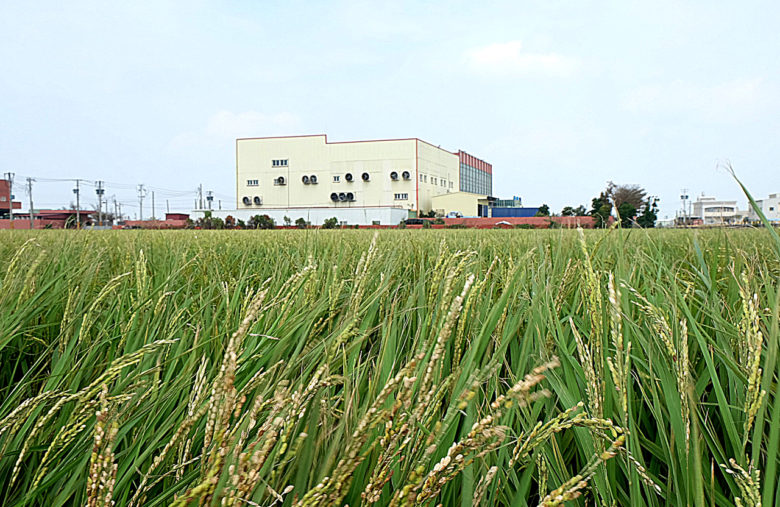
Besides the controversy sparked by Depo Industrial, what worries the public even more is that the Ministry of Economic Affairs may have designated special areas without reviewing them according to the integrity of local farmland. An actual on-site investigation by "NewsMarket" found that Changge Industrial, whose land use change was approved this time, is located in a complete agricultural section, with neighboring fields full of rice that is currently heading. Why could it also be changed? This has raised public doubts.


Illegally occupying farmland, legally changing it to building land: Changhua County Government and Ministry of Economic Affairs pass the buck
Pan Cheng-cheng, a researcher at the Citizens of the Earth Foundation, noted that Depo Industrial is already a listed and OTC-listed company and should have even greater corporate social responsibility. Unexpectedly, however, what it does requires the whole public to help clean up its mess. Now that the land use change has passed, operators only need to pay one more conversion feedback fee to turn farmland into Grade D building land. Under current regulations, the feedback fee is calculated as 50% of the announced current value of the land, but this is basically a drop in the bucket, because the land price after conversion will more than double many times over.
Why exactly can a large-scale company like Depo Industrial become a member of a special area? The Industrial Section of the Construction Division of the Changhua County Government consistently pushes the issue toward the central government. The Industrial Section stresses that the local government plays an intermediary role, only accepting applications from operators and then forwarding the cases to the Ministry of Economic Affairs for review; the power to approve or reject lies entirely in the hands of the Ministry of Economic Affairs.
Yun Jui-lung, section chief of the Central Office of the Ministry of Economic Affairs, explained that special areas are first proactively proposed by operators or county and city governments and sent to the Ministry of Economic Affairs for review and approval. But the review has its principles: the area proposed by the operator must be between 2 and 5 hectares, and the delineated scope must obtain the consent of at least 2/3 of the landowners, among other requirements. Next, the Ministry of Economic Affairs' review team will also discuss necessity, reasonableness and industrial characteristics.
Changge Industrial Zone is located in complete farmland; why can it also be delineated for change?
Yun Jui-lung admitted that he agrees with the criticism from the Regional Planning Committee review committee and civic groups. Factories with capacity like Depo should be encouraged to transform and relocate, but this and the delineation of special areas are two separate matters. "If an operator submits an application and meets the delineation requirements, the administrative agency must act in accordance with the law."
Besides the controversy triggered by Depo Industrial, what worries the public even more is that the Ministry of Economic Affairs may have designated special areas without reviewing them according to the integrity of local farmland. An actual on-site investigation by "NewsMarket" found that Changge Industrial, whose land use change was approved this time, is almost surrounded by farmland, with a very high degree of integrity, and the farmland is not abandoned; the fields above are still full of rice that is currently heading, very different from the factory conditions around nearby Depo Industrial.
Wu Chi-jung, a researcher at the Citizens of the Earth Foundation, pointed out that the Ministry of Economic Affairs needs to clearly explain how, at the time, it selected the "model students" that could be changed. For a long time, farmland in central and southern Taiwan has been polluted by illegal factories, and all one can see is polluted farmland with a sign stuck in it, announcing that it can no longer be cultivated. Yet the progress and funding of remediation have never been made public. Now the standards for delineating special areas again fail to incorporate consideration of farmland integrity, and the problems that arise in the future will only become more and more serious.