Good soil management can both make money and save the planet
By Kristin Ohlson
Editor's note: This article is excerpted from The Soil Will Save Us: How Scientists, Farmers, and Foodies Are Healing the Soil to Save the Planet. The author is a veteran writer with a particular passion for soil issues. She discovered that right beneath our feet lies an immense empire of microorganisms capable of converting the carbon dioxide that plants absorb from the atmosphere into the soil carbon that living things need to survive. The following article is excerpted from a chapter of the book, published with authorization from Common Master Press.
Plowing disturbs the soil - where does the carbon go?
As soon as human lifestyles shifted from hunting and gathering to farming, they began to alter the natural balance of carbon dioxide in the soil and the atmosphere. Around 5,000 BC, humans began making simple planting and harvesting tools. The earliest tools were just digging sticks, but by 2,500 BC, people in the Indus River valley were already using animals to pull plows.
Plowing seems harmless and carries a soothing pastoral feel, especially when oxen or horses pull the plow. But in nature, nothing regularly and repeatedly turns over 15 to 20 cm of soil (which is how deep plowing goes), so neither plants nor soil organisms have experienced such violent disturbance in their evolution, nor can they adapt to it.
Modern mechanized agriculture has worsened this problem: heavy machinery compacts the soil more tightly, which means it must be plowed deeper to loosen it. More soil is turned up and exposed to the air; soil carbon contacts oxygen, combines into carbon dioxide, and escapes into the upper atmosphere. This carbon may have been stored beneath the surface for hundreds or thousands of years.
Livestock grazing has also disrupted the carbon balance. Before humans domesticated ruminant animals, these animals roamed the great grasslands in herds, grazing the tops of grasses and other plants and depositing large amounts of fertile manure in return. They feared predators, so they never stayed in one spot to graze for very long. However, the way humans herded these livestock caused dramatic changes: the animals no longer roamed continuously across the plains but were confined to one area, where they would graze the grass down to nothing, pulling it out by the roots.
Letting livestock graze grassland down to bare ground blocks a great biological process - the photosynthesis that originally stored vast amounts of carbon underground. Plants take in carbon dioxide from the air, combine carbon dioxide with sunlight, and convert it into energy plants can use, namely carbon-based sugars. Not all carbon is consumed by plants; some is stored in the soil as humus, and this stable network of carbon molecules can persist in the soil for centuries.
Carbon in the soil has many benefits, including making soil more fertile and giving it a cake-like texture filled with many small air pockets. Carbon-rich soil can buffer against drought or flooding: when it rains, water is absorbed and retained by the soil rather than pooling or running off. Healthy soil is also rich in tiny organisms (as many as six billion in one tablespoon), which can break down toxins and pollutants that seep into the soil with rainwater.
Apart from photosynthesis, no other natural process continuously removes such large amounts of carbon dioxide from the atmosphere. If humans wanted to remove carbon dioxide on such a scale, it would either be prohibitively expensive or impossible to guarantee as safe. Photosynthesis regulates the stable cycle by which life-building carbon enters the soil and produces another gas that countless forms of life depend on: oxygen. Therefore, for life on our planet, photosynthesis is the most fundamental natural process.
Since I first read reports about global warming twenty-five years ago, this is the first time I have felt hope. Soil can save us. I truly believe it.
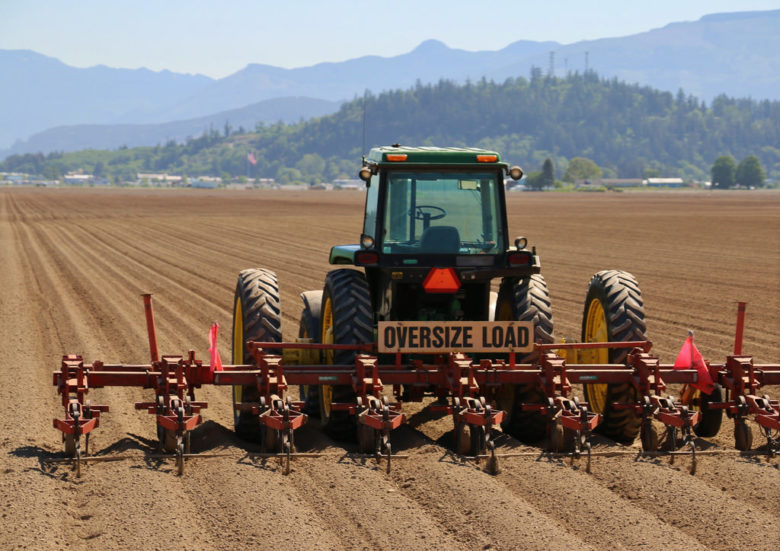
photo credit: A person holding soil in hands via photopin (license)
How is carbon storage actually measured?
The potential benefits of building soil carbon are great, and some people have developed general rules to align this biological accounting with economic accounting. First, the amount of stored carbon must be measurable in order to be included in accounting systems.
Second, activities that store carbon must be additional measures, meaning that farmers adopting no-till or cover cropping must not have used these practices before.
Third, activities that build soil carbon cannot involve carbon leakage, meaning soil carbon elsewhere cannot decrease as a result. If one farmer adopts some method to build soil carbon but causes the productivity of their own land to decline, and other farmers or herders must therefore use conventional methods that damage soil carbon and release carbon into the atmosphere to make up the food supply, that is carbon leakage. In other words, total soil carbon has not increased.
Fourth, the storage period of carbon must be meaningful, and this idea has sparked some intense controversy, centered on the concept of "permanence." For example, a farmer may have built soil carbon on land for five years, but then sells the farm to someone else, who turns the land into a residential development. In that case, the accumulated carbon will escape into the air after the bulldozer passes through.
Once soil carbon and microbial and fungal communities are cut apart and broken up, even the most stable forms of soil carbon will decompose within a few years, just as carbon stored in trees is released into the air by fire.
People who pay to accumulate soil carbon certainly do not want this to happen, but the reality is that farmland changes hands. Many farm leases are renewed year by year. Based on experience, over five years, roughly 17% to 20% of land changes operators. That is a lot of turnover.
In a complex biological system, very little is permanent, and that is hard to measure! Of course, even coal is not a permanent form of carbon storage. Perhaps only diamond is permanent. But around the world, smart people are working to develop protocols, and these protocols set out voluntary or regulated markets that are scientifically reliable and can verify and reward farming methods that store soil carbon and reduce other greenhouse gases.
Even people unrelated to the business opportunities of global warming are gradually paying attention to healthy soil. Agricultural and natural resource economist Shier told me on the phone: "Many groups are now doing large-scale complex analyses to understand the value of healthy soil and healthy fields. I think this situation will expand into policy, and people are increasingly realizing that some land management can provide various ecosystem services, and if we ignore this kind of management, we will pay the price."