Taiwan, China's nine-hole abalone can be reserved; A-Jian and his wife will open a canteen in the future
The steep headlands set against the deep, broad Pacific: it is not only carmakers who love to shoot commercials here in the Northeast Coast; Taiwan's native small abalone also loves the clean water here, making this a major hub of artificial aquaculture.
Yet over the past 10 years, disease has meant that no matter how the small abalone is raised, it will not grow large, and on top of that, large quantities of Chinese abalone are imported. Caught in a pincer movement from within and without, many farmers and hatcheries have abandoned small abalone farming, and what was once a star of the aquaculture industry has abruptly become a sunset industry.
To help their father, who has been farming for 30 years, find a way out, a young couple tried developing processed products, and opened a canteen What is generally called "abalone" refers to the edible organisms of the Haliotidae family, and the Taiwan-native small abalone, whose scientific name is "Haliotis diversicolor", is also classified within the Haliotidae family, so it also enjoys the fine names "Taiwan abalone" and "pearl abalone". Usually farmers release the seed on Qingming Festival, and around Mid-Autumn Festival and Double Ten Day they harvest once in response to market demand, called "sea-head" after that they harvest once more at Christmas and Lunar New Year, so it is roughly an aquatic product with half a year of rearing and half a year of harvesting. (This article was funded by the Jianzhen Environmental Education Foundation for personnel costs as a special project, but it completely does not interfere with news topic selection or interview writing, ensuring news independence)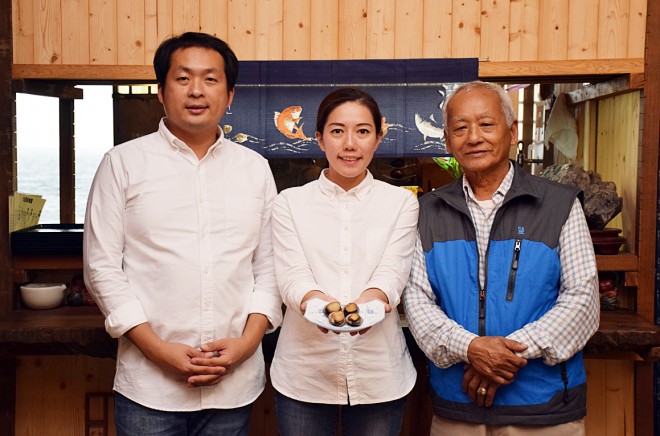


92K Canteen is located at the 92 km mark on Provincial Highway 2, open only on weekends; those who wish to visit can first make a reservation by phone or Facebook
News Glossary: Small Abalone