Why the poor who eat little meat get fat: inequality at the Italian table
Just as Italian dishes such as olive oil, pizza, lasagna and Parma ham have conquered dining tables around the world, alarm bells are ringing in their homeland. Hit by the economic crisis, Italians have tightened their belts: from 2007 to 2015, average household spending shrank by 5.7%, and spending on food fell by 12.2%, with meat showing the largest drop, reaching 16.1%.
Italians cut back on food spending, returning to an era when the dining table was divided by class
"It is as if time has flowed backwards, and we have returned to an era when the dining table was divided by class," pointed out Massimiliano Valerii, director of the Social Investment Research Center (Censis). "A gap has appeared in the ability of different social classes to obtain basic foods; those who cannot afford meat are precisely the group that has tightened its belt the most."
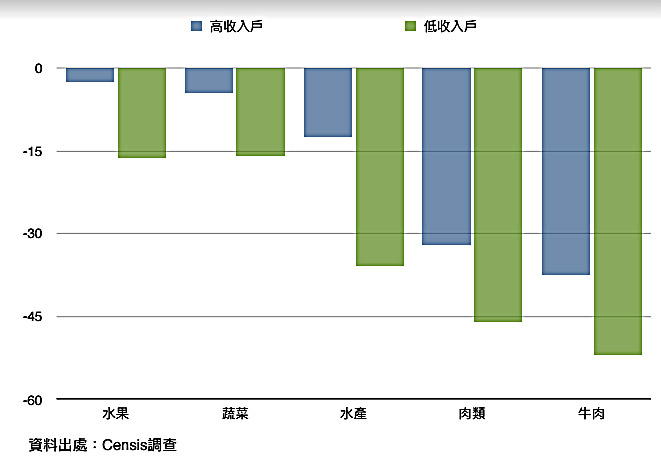
According to the "Italians at the Table" report, over the past year, fruit spending by high-income households fell by 2.6%, while low-income households cut theirs by 16.3%; on vegetables, high-income households reduced spending by 4.4%, while low-income households cut theirs by 15.9%; the drop in aquatic product consumption was even larger, with high-income households reducing spending by 12.6% and low-income households by 35.8%.
The biggest decline was in meat consumption: high-income households cut theirs by 32%, and low-income households by 45.8%. Beef fell even more sharply, shrinking by 37.3% in high-income households and by 52% in low-income households.


Elisabetta Moro, an anthropologist who studies the Mediterranean diet, also pointed out: "When Italians eat less meat, they are in fact moving closer to the Mediterranean diet, which was never centered on meat to begin with."
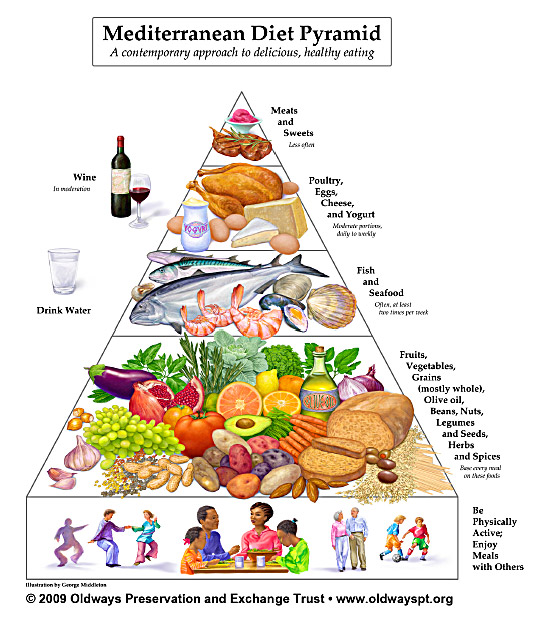
The Mediterranean diet became a UNESCO intangible cultural heritage in 2010. The nutrients people obtain come from olive oil, grains, fruits and nuts, plus a small amount of fish, dairy products and meat, seasoned with spices, and accompanied by wine at meals. As the word dieta gradually came to be simplified to mean "dieting," this word, derived from the Greek diaita, means a way of life. It is not only about eating and drinking, but also includes cooking in the kitchen, the social bond of sharing meals with relatives and friends at the table, and the ways of farming and raising livestock.
Italians live long lives, and many studies point out that this is closely related to eating habits. The Mediterranean diet was discovered in Italy; it originated among ordinary people but does not mean eating poorly. It is a diet everyone can afford, with balanced intake, and no food is regarded as taboo.
"Unfortunately, when the Mediterranean diet was introduced to the United States back then, it was hyped as food for the rich, while the poor could only eat junk food." Moro said, "Returning to the Mediterranean diet is the best answer for Italy to narrow the food social gap. This is not a return to ancient times, but an innovation of the current production and consumption methods of the 'food chain.'"