Nostoc, the fruit that puts the crunch on Chinese fruit acids The loquat is praised as a modern "fruit of filial piety": sweet, refreshing, and not sticky on the teeth
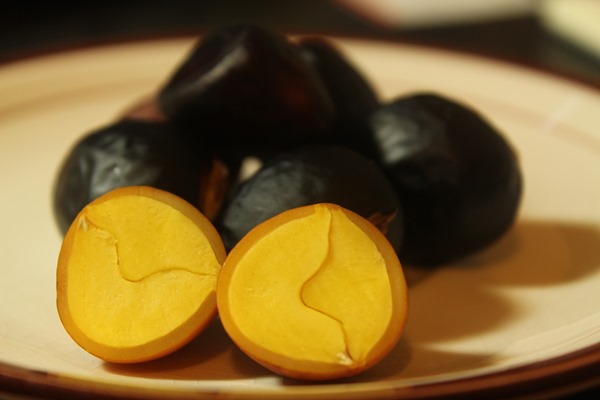
"After watching the movie 'Zone Pro Site,' you suddenly want to eat "ping po." Watching that movie with popcorn just feels a bit off!" Weng Lishu, who was born in the late years of the fifth grade and studied in central Taiwan, recalls her sweet memories of eating ping po in the past: "In front of movie theaters in the early years, besides sausages and roasted peanuts, sometimes ping po was sold. Black shell, yellow fruit, like chestnuts full of sweet juice yet refreshing and not sticky on the teeth. It is really rare to see now."
Ping po, also known as the phoenix eye fruit, is a common deciduous tree in central and southern Taiwan, with a black outer shell and bright yellow-brown kernel. Ya Li, a farmer in Zhongliao, Nantou, said, "Eating ping po as a snack" is a shared memory of the fourth and fifth grade generations, and many customers repeatedly beg, "My mother misses the taste of ping po very much. Could you please save me an extra bag?"
A childhood snack for many parents
"One customer said that her elderly mother, usually quiet and reticent, after eating ping po suddenly became talkative and animatedly recounted many past events of going into town to watch movies and eat snacks, which surprised her greatly!" Ya Li said with a smile that the largest group of ping po customers now are these children working hard to help their elderly parents recover childhood memories; ping po is like a modern "fruit of filial piety."
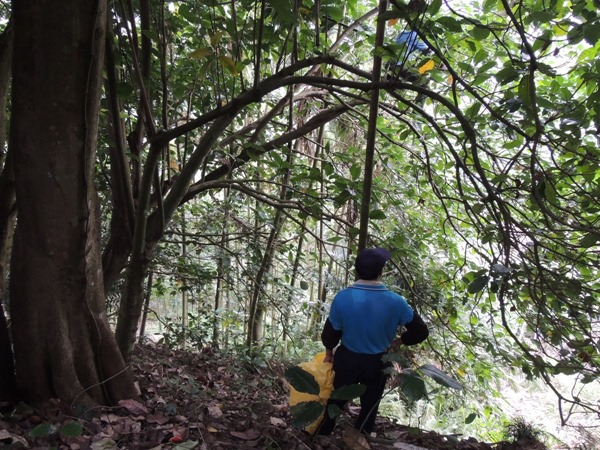
But the wishes of these filial children are not so easy to fulfill. Ya Li said that the flowering season of ping po coincides with Taiwan's plum rain, and it is easily blown to the ground by wind and rain. "The harvest has been poor for the past three years, only enough for squirrels, our family to eat, and to give to relatives and friends. This year, finally, there is enough to send to Taipei for sale." Because of material abundance, fewer people professionally grow ping po, and it is now mostly scattered in the mountains of central and southern Taiwan, appearing in a "wild" state. Many old trees even grow to the height of a four-story building and must be climbed high to harvest.
(This article was funded by the Jianzhen Environmental Education Foundation for personnel expenses, but it did not interfere at all with news topic selection or interview writing, ensuring news independence.)
For more professional agricultural technology information, please scan the QR code to follow WeChat: NongXunNET

Please indicate the source when reprinting.