What are the common types of pine bonsai?
Introduction: Forest style (suitable for Buddhist pine, Podocarpus macrophyllus): its shape is just like its name, it is not a bonsai made up of one pine tree, but several together, just like a whole forest, with a particularly strong sense of layering. Slanting trunk style: the trunk is slanted, and the branches of the tree extend outside the pot, like a sloping mountain peak. Lying trunk style (suitable
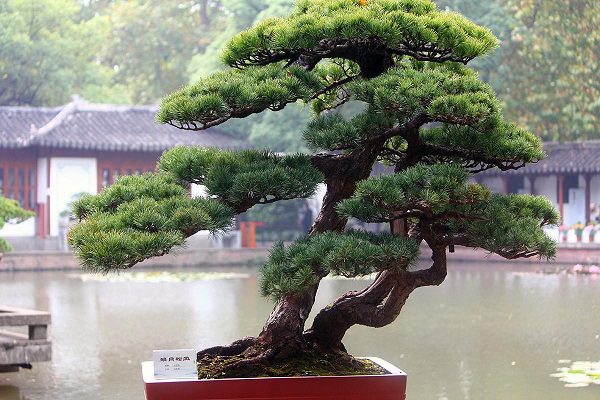
Forest style (suitable for Buddhist pine, Podocarpus macrophyllus):
Its shape is just like its name: it is not a bonsai made up of one pine tree, but several together, just like a whole forest, with a particularly strong sense of layering.
Slanting trunk style:
The trunk is slanted, and the branches of the tree extend outside the pot, like a sloping mountain peak.
Lying trunk style (suitable for needle juniper and Buddhist pine, Podocarpus macrophyllus):
The lying trunk style is also divided into three kinds: one is the semi-lying style, one is the supine style, and another is the flat-lying style; each has a different feeling.
Cliff style (suitable for needle juniper):
The cliff style is also divided into two kinds: one is the large cliff style, and one is the semi-cliff style; but in the cliff style, the trunk hangs outside the pot, and the branches grow in a downward-hanging way, but the hanging height must not be lower than the top rim of the flower pot.
Exposed root style:
Friends may not quite understand this one. It actually means exposing the tree roots on the outside, but the exposed root style has a rather noble and elegant feeling, and many people prefer this one.
Split trunk style:
The split trunk style is formed naturally over many years, and then people prune it. This is also the rarest kind; it looks very ancient and vigorous. So many bonsai enthusiasts hope to discover such a pine tree deep in the forest.
Epiphytic style:
This kind is slightly similar to the split trunk style in that both have deadwood, but it keeps only a part for the branches to rely on for survival.
For more professional agricultural science and technology information, please scan the QR code to follow WeChat: NongXunNET

Please indicate the source when reprinting.