Key Points for Organic Loofah Cultivation: Trap Crops and Yield Analysis
Located in Dounan Township, Yunlin County, "Chen Hao-wei Organic Farm" is a net house of about four fen of land. Walking into the bright farm where green vines cover the trellis, loofahs of various sizes hang down, and white butterflies dance among the yellow flowers, it is the experimental ground where owners Chen Zheng-fang and his son Chen Hao-wei practice organic farming, growing traditional rice-tube loofahs and the new apple loofahs, and recently also starting to cultivate emerald bitter gourd.
Dounan Township is an important loofah-producing area. Chen Hao-wei speculates, "It's the higher magnesium and calcium content in the soil that gives the loofah its unique flavor." The Dounan area is mostly clay, with high water saturation. Even though loofahs are relatively tolerant of moisture, farmers still have to work hard on drainage and aeration. Chen Hao-wei deliberately spaced the loofah plant rows wider apart to prevent the soil near the roots from being compacted by foot traffic and losing aeration. He raised the planting position so the plants are about 50-60 cm above the ground to enhance drainage, and also drilled holes in the raised surface and inserted bamboo pipes, using the chimney principle to expel soil moisture.
Bamboo pipe drainage
Returning Young Farmer: Two Generations Take Up the Hoe for Organic Farming
Chen Hao-wei, born in the 75th year of the Republic of China, is a returning young farmer. His grandparents once grew rice on this plot of land. Years ago, his father Chen Zheng-fang retired from his position as a police officer and returned to Dounan to care for his ailing parents, starting to grow pumpkins and other crops as a hobby. Chen Hao-wei was working at a health food company at the time, returning home every week to accompany his elders and also following his father into the fields. His heart ached for his grandparents suffering from illness, and having experienced the shocking tainted oil scandal, he came to recognize that people's health is closely tied to the source of their food, and the importance of organic agriculture.
Regarding whether to fully commit to organic farming, father and son originally had differences of opinion, but on one hand wanting to support his son's aspirations, and on the other hand thinking about the impact of the farming environment on health, Chen Zheng-fang decided to become Chen Hao-wei's teammate, working together for the transition to organic. Starting in 2012, Chen Hao-wei gradually embarked on the path of organic farming by participating in farmer academy courses and the Top 100 Young Farmers mentorship program.
Doing Organic Is More Complex Than Doing Experiments: Constantly Trying to Find the Most Suitable Approach
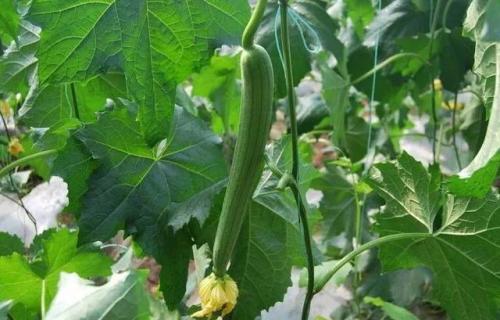
Walking into this net house in late spring, the sensory experience is rich. Green loofahs hang one by one from the trellis, some young fruits still connected to yellow flowers, looking quite beautiful against the blue sky. Pairs of white butterflies dance lightly on the grass, the honking of large white geese is incessant, and there is the buzzing of insects beating their wings. What is most special is the faint mint scent floating in the air. Because of Chen Hao-wei's dedication to maintaining the natural food chain cycle, parasitic fungi that can suppress pests have appeared in the vibrant farmland.
Inside the net house, busy bees among the vines are pollination helpers, the duck flock is released into the fields to eat snails and other pests, and two fierce white geese that act like guard dogs eat some weeds. Weeding is mainly done by hand, while special vegetation that can prevent weeds and reduce pests is also planted -- this is the source of the curious mint scent, including pennyroyal mint and heartleaf water mint. These trap crops that serve two purposes at once and adapt to the environment were confirmed only after much trial and error. Chen Hao-wei, a graduate school graduate, sighed that doing organic is much more complex than doing experiments: "Organic agriculture has no SOP! You just have to keep trying to find the approach that suits a specific environment."
Trap crops
The belief in suitability to the land is also reflected in his choice of self-saved loofah seeds that store local climate information, rather than commercial seeds that are more uniform in appearance but may not adapt to a specific environment and require pesticide and fertilizer application. To maintain the variety, in principle the flowers must be bagged immediately after manual pollination. Organic cultivation also gives the loofahs a slow and full ripening time, making the texture more firm and dense when eaten, with the white flesh not turning black after long cooking, and the soup carrying sweetness. "It tastes very much like the loofahs my grandmother grew in the backyard when I was little, which moves me a lot."
To maintain the locally adapted loofah variety, Chen Hao-wei bags the flowers immediately after manual pollination. The ecology inside the loofah net house is rich; besides white butterflies dancing among them, large white geese also help eat weeds.
Organic cultivation has low yields, and the impact is even greater when extreme climate hits. Since starting farming, it cannot yet be called economically profitable, but Chen Hao-wei has not given up. He thanks his parents for their support and his wife for her forbearance, and also mentions the support and companionship from senior fellow practitioners at Leezen and Fuye, from agricultural techniques and distribution channels to spiritual support. Sometimes when he worries about the poor appearance of his loofahs, someone at the store tells him: "I can never grab your apple loofahs!" Consumer encouragement gives him a shot in the arm.
At Chen Hao-wei Organic Farm, there are traditional rice-tube loofahs and a short, round new variety -- the apple loofah. Chen Hao-wei also suggests that summer loofahs are best wrapped in newspaper and stored in the vegetable drawer of the refrigerator to prevent them from developing fibers too quickly. Farmers work hard to grow safe vegetables, and hope consumers will taste them while fresh.