How to Grow and Care for Mini Oncidium Orchids
For most flower lovers, the mini Oncidium orchid is a bit unfamiliar, especially for beginner growers, but it is actually a very rewarding plant. Below we take a look at how to grow mini Oncidium orchids, and we hope this helps flower lovers care for them!
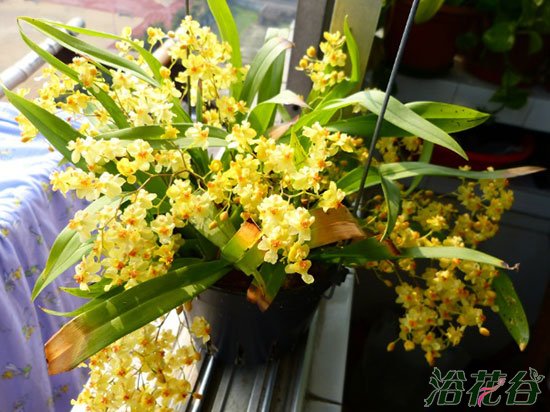
Mini Oncidium orchids are relatively easy to care for, seldom suffer from pests and diseases, have very fragrant flowers, and are easy to get through summer and winter, and rebloom fairly easily, making them very suitable for indoor display.
Mini Oncidium orchids are not tolerant of low temperatures, but in the Jiangsu, Zhejiang and Shanghai region, overwintering indoors is generally not a problem (except during cold waves). The optimum growing temperature for mini Oncidium orchids is 18°C to 25°C. If the indoor temperature is too high, ventilate promptly, as stuffy heat easily leads to pests and diseases.
For the medium, you can wrap the roots in sphagnum moss and secure them with bark. Mini Oncidium orchids like a humid environment; normally water once every two or three days, and when the indoor temperature is high, water once a day. When watering, you can also spray water on the leaves and around the pot to increase humidity.
Mini Oncidium orchids, like other Oncidium orchids, prefer a semi-shaded environment, and can be placed anywhere indoors with diffused light, but they must not be kept in a dark place for a long time, otherwise the branches and leaves will grow leggy and flower bud differentiation will be affected. Summer sunlight is strong, so they must not be placed on a balcony with direct sunlight.
Mini Oncidium orchids need to be repotted every year, and the growing medium should be replaced at the same time. The substrate is generally sphagnum moss with good water permeability, or materials such as bark and peat can be blended.
Mini Oncidium orchids can be given a small amount of slow-release fertilizer as a base fertilizer, and during the growing period gradually increase phosphorus and potassium fertilizer to promote flower bud differentiation and blooming. When not in bloom, apply an appropriate amount of compound fertilizer monthly, and stop fertilizing during the flowering period.
For more professional agricultural science and technology information, please scan the QR code to follow WeChat: NongXunNET

Please indicate the source when reposting.