Water entering the center of the shoot easily leads to bud rot: what prevention methods are there?
Many orchid growers may encounter orchid bud rot, that is, orchids rotting new shoots. As long as you investigate carefully, it is not hard to find the cause. Generally speaking, there are 6 main causes of orchid bud rot, such as water entering the bud core, bruising, insect damage, and so on. Below we analyze the causes in detail:
1) Careless watering or misting splashes into the center of the bud, or the plant is exposed to rain for a long time; combined with insufficient light and low temperatures, the water cannot be absorbed; or even after a heavy rainstorm the new buds are soaked in water and the water is not drained in time, causing bud rot.
2) Careless repotting and division, pruning of old leaves, routine watering, fertilizing, and pesticide spraying, or accidental injury, causes damage.
3) When applying liquid fertilizer, it accidentally splashes into the bud center and no attempt is made to remove it, causing rot.
4) The mother plant is infected with pathogens and no timely control is carried out; combined with the weak disease resistance of young buds, this leads to bud rot.
5) Scale insects, aphids, and red spider mites suck the sap of the buds, and rats bite and feed on the sweet-tasting tender buds and young leaves, causing damage.
6) Bud rot caused by root rot.
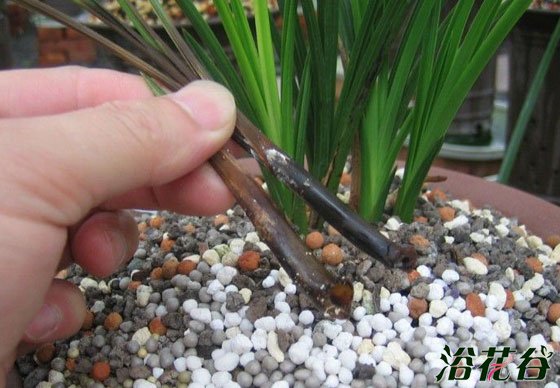
Prevention methods for orchid bud rot:
(1) For routine watering and fertilizing, it is best to use a ladle or scoop to pour from the edge of the pot; avoid spraying the orchid plant with a hose, to prevent soil and dirty water from splashing into the center of the bud. During the seedling stage, try not to spray water on the orchid plant; if spraying is necessary, a fine-nozzle sprinkler head must be used, the water droplets must not be too large, and it is best if the leaf surface does not drip. If a coarse-nozzle sprinkler head is used, the new buds must be covered.
(2) During the plum rain and continuous overcast-rainy seasons in summer and autumn, pay attention to preparing for rain protection. Either build a temporary rain shelter over the orchid plants with nylon cloth or plastic film, or move the orchid plants to a place where rain cannot reach them before rainfall. Also pay attention to watching the weather forecast; once there is heavy rain or extremely heavy rainstorm, emergency measures must be taken for prevention; if there is no time to avoid the rain, after the rain drain the accumulated water from the pots in time.
(3) In the severe summer heat, prevent strong light exposure, high-temperature baking, and poor ventilation; in the severe cold of winter, pay attention to cold protection and keeping warm, and avoid frost damage; in winter, the water temperature for watering should be close to the air temperature and must not be too high, otherwise it is easy to cause scalding.
(4) Sterilize and kill insects in time. During the growth period of orchid plants, regularly spray carbendazim, thiophanate-methyl, or other sterilizing agents to prevent problems before they occur. Once insect pests are found, promptly spray insecticides such as dimethoate, imidacloprid, profenofos, and fenitrothion. In daily work, also do a good job of safety and security in the orchid garden to prevent human-caused and accidental injuries.
For more professional agricultural science and technology information, please scan the QR code to follow WeChat: NongXunNET

Please indicate the source when reprinting.