What are the alternative names of the dragon blood tree? Get to know these names
The dragon blood tree, also called the bleeding tree, the holy herb for blood activation, and the plant longevity star. It is the precious Yunnan red medicine - dragon's blood, also known as qilin jie, and is as famous as Yunnan Baiyao. Li Shizhen praised it in the Compendium of Materia Medica as the "holy herb for blood activation"!
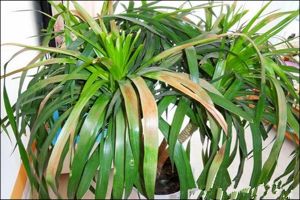
Alternative names of the dragon blood tree
The bleeding tree, the holy herb for blood activation, the plant longevity star, the useless tree, bamboo wood, the horse-mule sugarcane tree
Morphological characteristics of the dragon blood tree
An evergreen small shrub, up to 4m tall, with gray bark. Leaves sessile, densely clustered at the top of the stem, thickly papery, broadly linear or oblanceolate, 10~35cm long, 1~5.5cm wide, base enlarged and clasping the stem, narrower near the base, midrib conspicuous on the lower part of the back, rib-like, terminal large panicle up to 60cm long, 1-3 flowers clustered. Flowers white, fragrant. Berry spherical, yellow.
Many species and varieties of the same genus are used for garden ornament. The dragon blood tree has loose wood, a hollow trunk, and branches full of holes, so it cannot be used as a pillar; when burned it only smokes without catching fire, and it cannot be used as firewood either, so it is truly useless, which is why it is also called the "useless tree."
Growth habits of the dragon blood tree
The dragon blood tree likes high temperatures and high humidity, and likes light; with sufficient light, the leaves are brightly colored. It is not cold-tolerant; in winter the temperature should be about 15°C, with a minimum temperature of 5~10°C.
If the temperature is too low, because the root system cannot absorb enough water, yellow-brown patches will appear on the leaf tips and leaf margins. The dragon blood tree likes loose, well-drained soil rich in humus and nutrients.
Main value of the dragon blood tree
Ornamental: The dragon blood tree has a graceful and neat plant shape, and its leaf shapes and colors are diverse. It is an excellent foliage plant for modern interior decoration. Small and medium potted flowers can decorate a study, living room, and bedroom, while medium and large plants can beautify and furnish halls.
Medicinal: After the dragon blood tree is injured, it exudes a blood-colored liquid. This liquid is a resin, dark red, and is a precious traditional Chinese medicine. Its Chinese medicine name is "dragon's blood" or "qilin jie." It has the medicinal function of activating blood and can treat pain in the muscles and bones.
Economic: The deep red sap of the dragon blood tree can be used as a dye, or to paint violins.
For more professional agricultural science and technology information, please scan the QR code to follow WeChat: NongXunNET

Please indicate the source when reprinting.