What kind of growing environment does thyme like?
Thyme originated in the northwest region of China, and is currently cultivated in provinces such as Shanxi, Shaanxi, Qinghai, Gansu and Inner Mongolia. Thyme is a semi-shrub woody plant, and in China it also has other names such as "dijiao", "shan hujiao" and "shexiangcao".
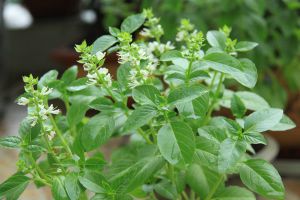
Other names of thyme
Thyme is a semi-shrub woody plant, and in China it also has other names such as "dijiao", "shan hujiao" and "shexiangcao".
Morphological characteristics of thyme
The stems of thyme are mostly ascending or creeping, covered with short fine hairs, and the flowering branches are about 1.5-10 cm tall.
The leaves of thyme are ovate, with 1-2 pairs of small serrations along the edges, hairless on both sides, and the petioles are relatively obvious.
When thyme blooms, the inflorescences are either capitate with many flowers or with few flowers; the corolla is mainly purple and red, about 6.5-8 mm long, and covered with sparse short fine hairs.
The nutlets of thyme are flat ovate or round, and their surface is very smooth.
Growth habits of thyme
Thyme is suitable for growing in an environment with sufficient light and dry, warm conditions.
It has few requirements for soil conditions; loose calcareous soil with good drainage is enough.
Thyme mostly grows on slopes, mountains, valleys and in weed thickets at an altitude of about 1100-3600 m.
Value and uses of thyme
Ecological value: thyme has strong environmental adaptability and can resist most pests and diseases. It also has the characteristics of many flowers, a fragrant scent and a long flowering period. It is a very common groundcover plant in modern landscaping and is also widely used in areas with relatively serious soil degradation to play an important ecological role.
Medicinal value: thyme was already used as medicine as early as the Northern Song Dynasty in China, and many traditional Chinese medicine classics have recorded its effects to a certain extent. For example, it can be used to relieve pain, address indigestion, and promote cough relief and phlegm reduction.
Edible value: thyme has a sweet and strongly fragrant aroma, and is a natural seasoning spice that has been used for a very long time. When cooking, thyme powder can be added to remove fishiness and enhance flavor.
The flower language of thyme
The flower language of thyme is "courage", symbolizing a brave and tenacious life.
For more professional agricultural science and technology information, please scan the QR code to follow WeChat: NongXunNET

Please indicate the source when reprinting.