What are the characteristics of the white peony succulent? A detailed guide in one article
White peony, Crassulaceae, Graptopetalum. The stems and leaves are succulent, the leaf color ranges from grayish white to grayish green, the leaf surface has a faint white powder, and the leaf tips develop a slight pink color in sunlight; the stems are sturdy. The white leaves open like peony flowers, and the offsets are tough and numerous. The petals have fine red dots, and the flowering period is spring.
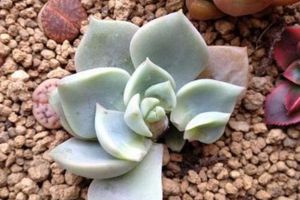
White peony habits
The white peony is an intergeneric hybrid of Echeveria and Graptopetalum. It loves a sunny environment, is not cold-tolerant, and tolerates drought and partial shade.
The suitable growing temperature is 20-25°C, and the growing season is summer. In spring and autumn, watering should be done once a week.
For home care, propagation is done by sowing and cuttings. Common pests and diseases include: rust disease and scale insects.
White peony care tips
Soil: Repot once every two years, in spring. Use a mix of peat soil, potting soil and coarse sand, with a small amount of bone meal added. Keep the potting soil dry. When repotting, the dead old roots can be trimmed off.
Watering: Water moderately in spring and summer, and control watering in autumn and winter. Because the plant has a high internal water content, the white peony rots easily in an overly humid environment, so be sure not to overwater; it is best to choose a pot with drainage holes at the bottom. Beginners can use a breathable red clay pot; glass containers absorb heat and have poor breathability, so use them with caution!
Fertilizing: During the summer growing season, fertilize once every 2 months. Use a light fertilizer mainly based on phosphorus and potassium. Do not fertilize too much, otherwise the plant will grow leggy and the leaf color will not turn red.
Light: The more sufficient the light and the greater the temperature difference between day and night, the more vivid the leaf color. If the temperature allows, it is best to place it outdoors for care to ensure sufficient light. When light is insufficient or soil moisture is excessive, it grows leggy, the whole plant turns light green or dark green, the leaves become sparse and the spacing stretches, speeding up upward growth, seriously affecting its ornamental value, and it may even die because the plant's photosynthesis is blocked.
White peony propagation methods
Leaf cuttings: Lay a complete mature leaf flat on moist sandy soil, with the leaf surface facing up and the leaf back facing down. There is no need to cover it with soil. Place it in a cool place. After about 10 days, small leaf clusters and new roots can grow from the base of the leaf. Bury the root system in the soil, then let it get more sunlight and water it appropriately, and gradually it will grow into a robust new plant.
Cuttings: You can use tiller shootsor terminal shoots. There is no limit to the length of the cuttings taken, but after the cut end has dried, remove the lower leaves and insert them into a sand bed to avoid excessive water evaporation. After insertion, roots generally form in about 20 days, and watering can begin after rooting; before rooting, it is normal for the bottom leaves to dry up and shrink. Once the root system is well developed, it will naturally recover after absorbing sufficient water. The soil must not be too wet, otherwise the cut end is prone to yellowing and rotting. When the roots are 2-3 cm long, the plant can be repotted. Division is best done in spring.
For more professional agricultural science and technology information, please scan the QR code to follow WeChat: NongXunNET

Please indicate the source when reprinting.