What is the common name of Indigofera amblyantha? A detailed explanation of the name Indigofera amblyantha
What is the common name of Indigofera amblyantha? Indigofera amblyantha is a rare summer-blooming plant in the north, and it can often be seen in northern cities. In the undergrowth and beneath bridges, Indigofera amblyantha has a unique shade-tolerant advantage, making it outstanding in northern urban greening. Come take a look at this urban greening expert with the editor! 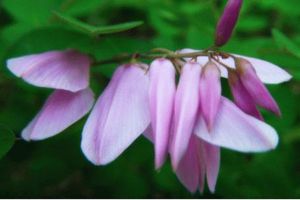
Family and genus of Indigofera amblyantha
Rosales, Faboideae, Indigofera
Distribution of Indigofera amblyantha
It is mostly distributed in Northeast and North China, mainly growing in hillside thickets and loose rock crevices.
Growth habits of Indigofera amblyantha
Indigofera amblyantha likes light and is cold-resistant, has low soil requirements, is drought-resistant and tolerant of poor soil, has strong adaptability to the environment and strong adaptability to temperature, and is suitable for growing in subtropical regions.
Morphological characteristics of Indigofera amblyantha
Indigofera amblyantha is a deciduous shrub with a plant height of about 30-100 cm, and the whole plant is often covered with T-shaped hairs or simple hairs. The leaves are pinnately compound, usually odd-pinnate, the leaf tips often have awn-like points, the stipules are relatively small, and the leaf surface has bristles. The raceme is axillary; the calyx has 5 lobes; the stamens are separate, and the apex of the anther connective often has glands.
Uses of Indigofera amblyantha
The leaves of Indigofera amblyantha are the raw material for making natural indigo. Chop the leaves, ferment them for about half a month, add water and rinse out the juice, filter it and add alkali to obtain natural indigo, which can be used to dye cloth and can also be used as a painting pigment.
Indigofera amblyantha has luxuriant branches and leaves, blooms in early summer, and has elegant flower colors. It is very beautiful and suitable for flower hedges, as well as for greening along highways, railways, slopes, and roadsides. It is also very widely used as a material for flower beds and flower borders.
For more professional agricultural science and technology information, please scan the QR code to follow WeChat: NongXunNET

Please indicate the source when reprinting.