A grand roundup of evening primrose's other names: it turns out it goes by all of these
Evening primrose is a dainty plant, with flowers mainly in yellow-green or red, and it is the most important nutritional medicine discovered this century. Next, let us get to know this remarkable plant.
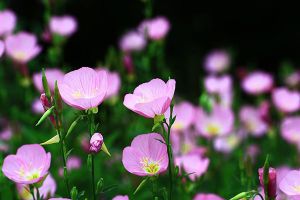
The genus and family of evening primrose
Evening primrose is a species in the genus Oenothera, family Onagraceae, an upright, robust biennial herb.
Other names for evening primrose
Evening primrose is also called late cherry grass, evening primrose grass, mountain sesame, wild sesame.
The origin of evening primrose
Evening primrose is native to North America, was introduced to Europe early on, and later spread rapidly through temperate and subtropical regions. It is cultivated in Northeast China, North China, East China and Southwest China, and has long since become naturalized.
Morphological characteristics of evening primrose
Evening primrose has a basal rosette of leaves pressed close to the ground, stems 50-200 cm tall, with soft hairs and spreading long hairs, and often mixed with glandular hairs at the upper ends of the stems and branches.
The leaves are oblanceolate, sharply pointed at the tip, wedge-shaped at the base, with irregular shallow blunt teeth along the edges, and petioles 0-15 mm long.
The inflorescence is spicate, unbranched, or with secondary lateral inflorescences below the main spike; the bracts are leaf-like, the flower buds are conical-oblong, yellow-green or tinged with red when flowering, covered with mixed soft hairs, spreading long hairs and short glandular hairs.
For more professional agricultural science and technology news, please scan the QR code to follow WeChat: NongXunNET

Please indicate the source when reprinting.