Golden Glow Sedum: Do You Really Know It?
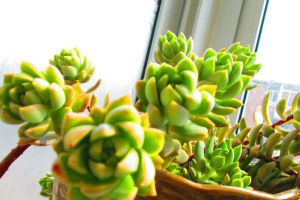
Common Names of Golden Glow Sedum
Golden Glow Sedum is commonly known as Golden Stonecrop and Jewel Flower.
Habits of Golden Glow Sedum
Golden Glow Sedum is a succulent in the Crassulaceae family, Sedum genus, and spring and autumn are its peak growing seasons.
Golden Glow Sedum is native to Mexico and prefers a warm, dry environment, with the most suitable growing temperature being 18~25°C.
Golden Glow Sedum needs plenty of sunlight to grow and can also tolerate partial shade, but avoid direct strong light; under humid light conditions, the middle of the leaf is green and the leaf tip is yellow.
Common propagation methods for Golden Glow Sedum: division, cuttings, and leaf cuttings.
Care Tips for Golden Glow Sedum
Light: In summer, provide appropriate shade during strong light to prevent sunburn. In other seasons, it can receive full-day sunlight; under suitable light and a large temperature difference, the leaves will turn bright yellow or pale red. Grown this way, 2~3-year-old plants can be used as shaped potted plants!
Watering: Water moderately during the growing season to keep the potting soil slightly moist; water once a month in winter; in summer the plant is in a semi-dormant state, so keep the potting soil dry.
Fertilizing: Fertilize once a month during the growing period. Stop fertilizing in summer.
Pests and diseases: Common pests and diseases include southern blight and scale insects. Southern blight mainly damages the roots of Golden Glow Sedum, causing the plant to wilt and turn yellow; promptly prune the diseased roots, disinfect with a fungicide, and replant. Scale insects often appear on the leaves, sucking the leaf sap, making the leaves thinner and affecting plant growth; once found, they can be scraped off with a bamboo strip.
Propagation Methods for Golden Glow Sedum
Cuttings: Can be done throughout the year, with spring and autumn being best. Cut off the top stem, about 5`7 cm long, let it dry slightly, then insert it into a sand bed; it will root after 3~4 weeks.
Leaf cuttings: Remove leaves from the middle and lower part of the plant, place them flat on a dry sand surface, and keep them in a ventilated, bright place with reduced watering; after 2~3 weeks, adventitious buds will grow, and once they become young plants they can be potted.
Division: Divide during repotting in spring.
Suggested planting combination: Echeveria runyonii.
For more professional agricultural science and technology information, please scan the QR code to follow WeChat: NongXunNET

Please indicate the source when reposting.