What are the characteristics of the Brazil wood? A complete guide for you
Other names of the Brazil wood
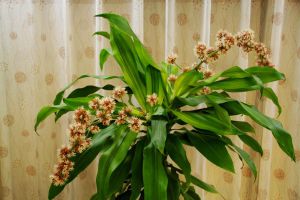
The Brazil wood is an evergreen tree of the genus Dracaena in the family Liliaceae, also called Brazil iron tree, fragrant millennium wood, tree of happiness, and striped millennium wood. The leaves of the Brazil wood are curved in an arch shape, bright green and glossy, and the flowers are small and inconspicuous, fragrant. It is a famous new-generation indoor foliage plant.
Commonly cultivated plants of the same genus include: Dracaena deremensis, lucky bamboo, Dracaena cinnabari, and Dracaena, among others.
Morphological characteristics of the Brazil wood
The Brazil wood is a tree-like evergreen plant, with a plant height of up to 6 m.
The stem is thick and large, with many branches. The bark is grayish-brown or light brown, peeling in flakes. The leaves are broad and large, growing robustly. It is about 1.2 m or more in length, with the upper and lower ends cut flat, leaves emerging from the top and Dracaena plants grafted in the middle, with leaves clustered at the top of the stem, 40-90 cm long, 6-10 cm wide, with slightly blunt tips, curved into an arch shape, with bright yellow or milky white stripes.
The leaf margins are bright green and have wavy undulations, glossy, and the flowers are small, yellow-green, and fragrant. The lower root part is radial. Generally, the stem spacing is in a long, medium, and short ratio of 100:70:50 cm, planted together in one pot, so that the leaves appear fuller.
Origin and value of the Brazil wood
The Brazil wood is native to Guinea, Ethiopia, and tropical southeastern Africa. It is also distributed in Yunnan, Guangxi, and Hainan in China, as well as Thailand, Laos, Cambodia, Indonesia, and the Americas.
The Brazil wood is a fairly popular large indoor potted ornamental plant, especially when placed in a relatively spacious living room, study, or sitting room, with an elegant and simple style, and with a southern-country flavor. It is a world-famous new-generation indoor foliage plant with a graceful and neat plant shape.
Complete list of Brazil wood varieties
Common varieties include:
1. Yellow-edged fragrant dracaena (Linderii), leaf margins pale yellow
2. Massangeana (Massangeana), with yellow longitudinal stripes in the center of the leaf surface
3. Golden-edged fragrant dracaena (Victoriae), leaf margins deep yellow with white edges
4. Among ornamental species of the same genus is the tricolor dracaena (D. concinna cv. Tricolor), with green leaves and yellow-white and red longitudinal stripes
5. Rainbow dracaena (D. concinna cv. Rainbow), with the midrib pale yellow, the margins deep red, and the area between the midrib and margins light brown
6. Dense-leaved dracaena (D. deremensis), among which the cultivar Bausei has dark green leaves with a broad milky white band in the center
7. Janet Craig (JanetCraig), with golden yellow leaves
8. Roehrsii (Roehrsii), with green-white leaf surfaces and golden yellow stripes
9. Golden Roehrsii (RoehrsGold), with beige leaf margins and gray-green centers
10. Silver-line dracaena (Warneckei), with long sword-shaped leaves, twisted tips, dark green margins, pale green midrib, and white markings.
11. Gold dust dracaena (D. godseffiana), with dark green leaves and yellow and milky white spots. Its cultivar Florida Beauty (FloridaBeauty) has densely distributed milky yellow spots on the leaf surface; Friedman (Friedman) has dark green leaves, with a white spotted band in the center and densely distributed milky white spots on the margins. Queen dracaena (D. goldieana) has ovate leaves with transverse light green and gray-white spotted bands.
12. The cultivar Celes (Celes) of lucky bamboo (D. sanderiana) has leaves 1-2 cm wide, dark green, with white edges
13. Silver-edged lucky bamboo (MargaretBerkery), with white spotted bands on the leaf margins
14. Golden-edged lucky bamboo (Virescens), with yellow spotted bands on the leaf margins
15. Boringuesis (Boringuesis), with dark green leaf surfaces and yellow-green fine stripes.
Living habits of the Brazil wood (how to grow it)
The Brazil wood likes a high-temperature and humid climate.
It is highly adaptable to light and can grow with slight shade or in sunlight, but in spring, autumn, and winter it should receive more sunlight, while in summer it should be shaded or placed in a well-ventilated indoor spot for cultivation.
The Brazil wood has strong vitality and needs only sunlight, air, and very little water, and can live well on its own potential energy.
The Brazil wood is drought-tolerant but not waterlogging-tolerant.
During the growing season, it can be watered thoroughly.
The Brazil wood fears cold and freezing, so in winter it should be placed indoors in a sunny spot, and the temperature should be maintained at 5°C-10°C.
The Brazil wood is mostly used as an indoor ornamental plant in homes or offices, and placing it beside a sofa is very stylish.
Brazil wood picture appreciation
For more professional agricultural science and technology information, please scan the QR code to follow WeChat: NongXunNET

Please indicate the source when reprinting.