In which environment does small fragrant scallion grow more advantageously?
Small fragrant scallion, a monocotyledonous plant, cold-tolerant, relatively heat-tolerant, drought-tolerant but not waterlogging-tolerant, fine and tender in texture, with a strong aroma. It is mainly grown for its tender leaves, an indispensable seasoning when cooking dishes, fish and soups, and also a major variety for dehydrated vegetable processing.
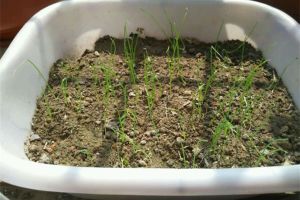
Small fragrant scallion morphological characteristics
The plant clump is upright, generally 45-55 cm tall, with a spread of 12 cm * 15 cm, medium tillering ability, vigorous growth, tubular leaves about 40 cm long, 0.6-0.8 cm in transverse diameter, green, the white portion 8-10 cm long, 0.7-0.9 cm in transverse diameter, the bulb not swelling, the white portion near the ground slightly thicker, fibrous roots white.
Small fragrant scallion growth habits
Small fragrant scallion has strong tillering ability, a short growing period, a high multiple-cropping index, strong adaptability, and is relatively easy to cultivate. Small fragrant scallion originated in Germany and is a biennial or perennial root perennial plant of the Liliaceae genus.
Early-maturing, generally harvested 50-80 days after transplanting or direct seeding, cold-tolerant, relatively heat-tolerant, drought-tolerant but not waterlogging-tolerant.
Small fragrant scallion home care tips
Environmental requirements
Small fragrant scallion is relatively cold-tolerant and heat-tolerant, and can be planted in all four seasons. The optimum growth temperature is 18°C-23°C. Its root system is shallow, its water requirement is small, it is not drought-tolerant, and it is suitable for planting in sandy soil.
Light intensity requirements are moderate; under strong light it tends to age and its quality deteriorates. Water sources, soil and air quality should meet the requirements for pollution-free production areas.
Propagation methods
Sowing: sowing can be carried out in spring, summer, autumn and winter, and the soil chosen should be fertile and loose.
Division: when dividing, be careful to bury the entire scallion head in the soil, gently covering it with a layer of fine soil.
For more professional agricultural science and technology information, please scan the QR code to follow WeChat: NongXunNET

Please indicate the source when reprinting.