A Detailed Explanation of the Characteristics and Symbolic Meaning of Wax Begonia
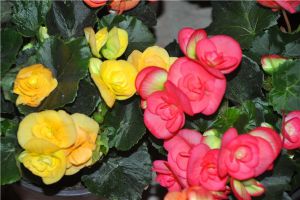
Wax begonia, also known as glass begonia, belongs to the Begoniaceae family and is a fleshy herbaceous begonia. It is the most common and most widely cultivated species. Its form is graceful, its leaves are delicate and glossy, its flowers bloom in clusters, opening in all four seasons, and it carries a slight fragrance, making it one of the main potted flowers for indoor and outdoor decoration.
Other names for wax begonia
Clam-flesh begonia, glass begonia, glass jade, four-season begonia, melon-seed begonia, rose begonia, saxifrage begonia
Morphological characteristics of wax begonia
Wax begonia is a perennial evergreen herbaceous plant with upright, slightly fleshy stems, 25 cm to 40 cm tall, and well-developed fibrous roots; the leaves are ovate to broadly ovate, with oblique bases, green or purplish red; it is monoecious with unisexual flowers, and the cymes are axillary. Flower colors include red, pink and white, with single or double petals, and there are very many cultivars.
Growth habits of wax begonia
Wax begonia likes sunlight and tolerates slight shade. It is rather afraid of cold and likes warmth, a slightly shady and humid environment and moist soil, but it fears heat and waterlogging. In summer, pay attention to shading, ventilation and drainage. Wax begonia is very sensitive to sunlight, so in summer the lighting time should be adjusted well, a suitable growing environment should be created and shading should be carried out. Indoor plants should be placed in a spot with sufficient scattered light and good air circulation, and windows should be opened at night for ventilation.
Cultivars of wax begonia
The leaves of wax begonia can be divided into two major types: one turns red-green after receiving sunlight, and the other is reddish copper. Flower colors include red, peach, white, bicolor and so on. Flower forms are also divided into double-petaled and single-petaled. Double-petaled cultivars are not easy to seed and are mostly propagated vegetatively by cuttings. The cultivars sold on the market are almost all hybrid F1 cultivars, which are vigorous in nature.
Common cultivars include: Olympia series, Hi-Fi series, Lolita series, copper-leaf series, Ambassador series, Olympic, Dance series, Fax, Pink Concerto, Vodka and others.
Application value of wax begonia
Wax begonia is used very widely internationally. Besides potted ornamental use, it is also a material for flower beds, hanging baskets, planting troughs, window boxes and indoor arrangements. Its quantity and quality in use have developed rapidly. In the United States, besides potted ornamental use, it is used more for flower bed display, and many new cultivars with strong adaptability, heat resistance and moisture tolerance have been selected and bred. In Northern European countries such as Denmark, Sweden and Norway, mainly high-quality potted ornamental types are produced and exported to Western European countries. Among them, Denmark's Dæhnfeldt company is famous for producing wax begonia. The Netherlands, the United Kingdom and France and other countries also have a certain amount of production. In short, wax begonia is still quite popular in the European market. Japan has a certain amount of production, mainly to meet the needs of the domestic market. Seeds are imported from the United States and Denmark.
In traditional production, wax begonia is a perennial greenhouse potted flower. In recent years people have applied it to flower bed arrangements with excellent results. With the emergence of some relatively heat-tolerant cultivars, wax begonia is very likely to become one of the most important flower bed flowers in China, with advantages such as a neat plant shape, abundant and dense flowers, being very easy to combine with other flower bed plants, and a long ornamental period, so it is becoming more and more popular. It is generally cultivated in spring and autumn.
The flower language of wax begonia
Wax begonia is suitable for giving to children, and its flower language is: happy and intelligent; it can also be given to adults full of childlike innocence, implying spring in all four seasons and becoming younger.
For more professional agricultural science and technology information, please scan the QR code to follow WeChat: NongXunNET

Please indicate the source when reprinting.