What are the other names of the Dancing Bones? It turns out it has these names too.
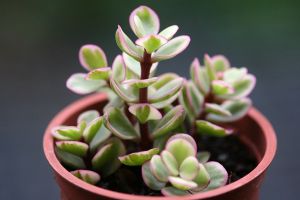
Growing habits of the Dancing Bones
A variegated cultivar of Portulacaria afra. It likes warmth and bright light. It is drought-tolerant but not cold-tolerant, and the winter temperature should not be lower than 10°C.
Favorite temperature: 21-24°C
Watering: keep moist during the growing season
Light: bright light
Propagation: cuttings
Pests and diseases: rust, scale insects
Combination suggestions: Graptopetalum paraguayense, Portulacaria afra f. variegata
Care tips for the Dancing Bones
Potting soil: repot every spring. When repotting, cut off overly long and overly dense stem nodes to keep the stems and leaves evenly distributed. Use a mix of leaf mold, fertile native soil and coarse sand for the potting soil, adding a small amount of superphosphate. During the growing season keep the potting soil moist, but good drainage is required.
Watering: during high summer temperatures, be careful to control watering and maintain good ventilation. You can mist around the pot to increase air humidity. Reduce watering in winter and keep the potting soil slightly dry.
Fertilizing: fertilize once every 2 months with diluted cake fertilizer water or "Huiyou" 15-15-30 special fertilizer for potted flowers.
Propagation methods of the Dancing Bones
Cuttings: in spring or autumn cut semi-mature branches 8-10 cm long, insert them into a sand bed, and they can root after about 3 weeks; pot them up after 4 weeks.
For more professional agricultural science and technology information, please scan the QR code to follow WeChat: NongXunNET

Please indicate the source when reprinting.