What makes the white orchid (Michelia alba) special? A comprehensive analysis of its characteristics
The white orchid originated in Java, Indonesia, and is now widely cultivated in Southeast Asia. Fujian, Guangdong, Guangxi, Yunnan and other provinces and regions are areas where it is widely cultivated in China, while in the Yangtze River basin and other provinces and regions it is often grown in pots.
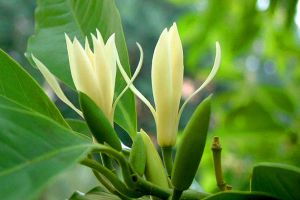
Other names of the white orchid (Michelia alba)
Michelia alba is an evergreen tree of the genus Michelia in the family Magnoliaceae, also known as "Baimianhua" and "Mian'guihua".
It originated in Java, Indonesia, and is now widely cultivated in Southeast Asia. Fujian, Guangdong, Guangxi, Yunnan and other provinces and regions are areas where it is widely cultivated in China, while in the Yangtze River basin and other provinces and regions it is often grown in pots.
Morphological characteristics of the white orchid (Michelia alba)
Michelia alba can grow up to about 17 m tall, while potted specimens are generally 3-4 m tall. Its spreading branches give the crown a broad umbrella shape; the bark is gray; the young branches and buds bear fine pale yellow or white downy hairs that gradually fall off as they grow. The leaves are thin and glossy, leathery, elliptical, and mainly blue-green in color.
The flowers are white or pale yellow with a rich fragrance; the petals are rather thick and fleshy, roughly long-lanceolate in shape.
Growth habits of the white orchid (Michelia alba)
It prefers ample light, and a well-ventilated, humid and warm environment is most favorable for its growth; the soil is best chosen as a fertile, loose, well-drained, slightly acidic soil.
High temperatures and strong light can easily have adverse effects on the growth of Michelia alba, and its cold tolerance is also poor; waterlogging and typhoons can cause varying degrees of harm to it; in addition, it is averse to smoke gases (sulfur dioxide, chlorine, etc.), and its overall resistance is not strong.
Value and uses of the white orchid (Michelia alba)
Ornamental value: as an ornamental flower, the white orchid plant is upright and straight, with neatly arranged and attractive branches. In the south it is generally cultivated in courtyards and is very widely used in gardens. In the north it is grown in pots and placed in home courtyards, halls and meeting rooms as decoration; small and medium-sized plants can also be placed in living rooms and studies.
Medicinal value: the whole plant of Michelia alba can be used as medicine, and it has good therapeutic effects on diseases such as chronic bronchitis, prostatitis and chronic cough due to consumptive disease.
Other value: in addition, scenting flower tea and making spices are both very practical uses of the white orchid. The white orchid itself has a strong fragrance, and the tea brewed from it is also mellow in taste, with a fresh, bright and lustrous color, and both its appearance and mouthfeel are good. Because the white orchid contains aromatic volatile oils, bactericides and antioxidants and other substances, the spices made from it have a unique effect on beautifying the environment, purifying the air and perfuming the room; the essential oil extracted from it can also play considerable roles in beauty care, diet and medical treatment.
The flower language of the white orchid (Michelia alba)
The flower language of the white orchid is "pure and flawless love and utterly sincere friendship".
For more professional agricultural science and technology information, please scan the QR code to follow WeChat: NongXunNET

Please indicate the source when reprinting.