What other names does cockscomb go by? A rundown of its common aliases
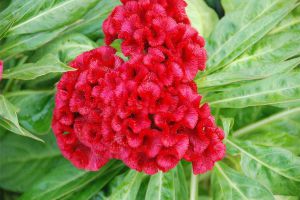
Aliases of cockscomb
Cockscomb, a herbaceous plant, has the following Chinese aliases: cockscomb flower, laolaihong, reed-flower cockscomb, pen cockscomb, small-head cockscomb, phoenix-tail cockscomb, big rooster flower, cockscomb root, red cockscomb.
Distribution of cockscomb
Cockscomb is native to Africa, tropical America and India, and is widely cultivated around the world as an annual herbaceous plant.
In China it is mainly distributed in Anhui, Beijing, Fujian, Gansu, Guangdong, Guangxi, Guizhou, Hainan, Hebei, Heilongjiang, Henan, Hong Kong, China, Hubei, Hunan, Jiangsu, Jiangxi, Jilin, Liaoning, Inner Mongolia, Ningxia, Qinghai, Shaanxi, Shandong, Shanxi, Sichuan, Taiwan, China, Xinjiang, Tibet, Yunnan, Zhejiang.
Growth habits of cockscomb
Cockscomb prefers a warm and dry climate, is afraid of drought, likes sunlight, does not tolerate waterlogging, and is not strict about soil requirements; it is a new pathway in the current development of courtyard economy.
Morphological characteristics of cockscomb
Cockscomb is an upright herbaceous plant, about 30-80 cm tall, with the whole plant hairless and stout.
The upper part of the plant is flattened, green or tinged with red, with raised ridges; the leaves are alternate, stalked, 5-13 cm long and 2-6 cm wide, with a tapering or long-pointed tip, the base narrowing into a stalk, and entire margins.
Below the middle there are many flowers; the bracts, bracteoles and tepals are dry and membranous, persistent; the utricle is ovate, about 3 mm long, and its lid splits open when ripe, enclosed in the persistent perianth. The seeds are kidney-shaped, black, and somewhat glossy.
The leaves of cockscomb are ovate, ovate-lanceolate or lanceolate, 2-6 cm wide; the flowers are numerous and very densely arranged, forming flattened fleshy cockscomb-like, curled-comb-like or feathery spike inflorescences; below one large inflorescence there are several smaller branches, conical-oblong, with a feathery surface.
The tepals are red, purple, yellow, orange, or red alternating with yellow. The flowering and fruiting period of cockscomb is July to September.
For more professional agricultural science and technology information, please scan the QR code to follow WeChat: NongXunNET

Please indicate the source when reprinting.