What other names does the money tree have? Common names explained at a glance
The money tree is a perennial evergreen herbaceous plant, a rare foliage plant with underground tubers, native to tropical Africa.
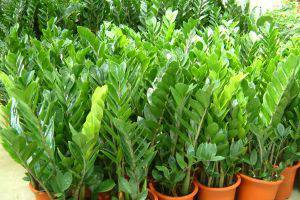
Money tree
The money tree, also known as Zamioculcas zamiifolia and golden pine. The money tree is a perennial evergreen herbaceous plant, a rare foliage plant with underground tubers, native to tropical Africa. The above-ground part of the money tree has no main stem; adventitious buds sprout from the tubers to form large compound leaves, and the leaflets are fleshy with short petiolules, firm and deep green; the underground part is a plump tuber. Pinnate compound leaves emerge from the top of the tuber, the leaf rachis is stout, and the leaflets are opposite or nearly opposite on the rachis. The base of the petiole is swollen and woody; each compound leaf has 6 to 10 pairs of leaflets, with a lifespan of more than 5 years, constantly renewed by new leaves.
Ecological habits of the money tree
The money tree is native to the tropical (savanna) climate zone of eastern Africa with relatively low rainfall. It likes warm, slightly dry, semi-shady environments with small annual average temperature fluctuations, is relatively drought-tolerant, but fears cold, avoids strong direct sunlight, and fears heavy, sticky soil and water accumulation in the pot. If the pot soil has poor drainage and aeration, it can easily cause its tubers to rot. It requires loose, fertile soil that drains well, is rich in organic matter, and is acidic to slightly acidic. It has strong sprouting ability; after cutting off the thick compound leaves, new leaves will quickly emerge from the top of the tuber.
Ornamental value and uses of the money tree
Examining the money tree plant carefully from an aesthetic point of view, its newly emerging pinnate compound leaves almost always come in pairs, one long and one short, one thick and one thin, hence it is also known as the "dragon and phoenix wood." Each of its even-pinnate compound leaves has a thick, strong base at the leaf rachis, as if it were a raised Buddha's belly. The middle and upper part of the leaf rachis is cylindrical, with irregular dark brown markings, as if covered with a layer of camouflage. Its oval or ovate leaflets on the compound leaves are thick in texture and deep green in color, as if coated with a layer of sparkling glaze in the sunlight. If several plants are planted together in an exquisite blue-and-white porcelain pot, they convey a vigorous, upward vitality and a lush, dripping-green energy.
The money tree is a rather popular large indoor bonsai plant, especially when placed in a relatively spacious living room, study, or sitting room, where it has an elegant, simple style and a southern tropical flavor. It is a world-famous new-generation indoor foliage plant with a graceful, neat plant shape.
1. Placing the money tree in the office. The newly emerging pinnate compound leaves of the money tree have the alternative name "dragon and phoenix wood," which is very peculiar. The oval or ovate leaflets on the compound leaves are thick in texture and lovely deep green. If several plants are planted together in an exquisite blue-and-white porcelain pot, they give people a feeling of vigorous upward growth and lush, dripping-green energy. It is most suitable for placing on an office desk, suitable for openings and promotions, heralding rolling wealth for you. At the same time, the money tree's ability to regulate humidity can also play a role in the office. An air-conditioned office with several pots of money trees will become healthier
2. Placing the money tree on the balcony. In everyone's home, the balcony is the place closest to nature's sunlight, air, and rain, and is the place where the house receives energy, having a very important influence on the feng shui of the entire residence. Green plants can regulate vitality. Generally speaking, the money tree has round, thick, plump leaves, is easy to grow, and has vigorous vitality; it absorbs external metal energy, which is extremely beneficial for bringing wealth into the home. Moreover, money trees with thicker, larger, and greener leaves are even better. Placing it on the balcony is not only conducive to prospering the home but also to beautifying the home, pleasing the mood, and having a very positive impact on people's physical and mental health.
3. Placing the money tree indoors. We all know that some plants are very suitable for placing at home, helping greatly with both feng shui and family health. Placing a wealth-attracting plant indoors, such as the money tree, can help attract wealth. The living room is a place for entertaining guests and gathering with friends; placing a flowering plant like the money tree, which carries the meaning of good fortune and gathering wealth and prosperity, enhances the home's wealth luck and has the effect of bringing in wealth and treasure. If it can be placed in the wealth position, the effect is even better, especially for money trees with large leaves, but note that it must be planted in soil, not grown in water. Also note that once the plant becomes sick or withered, it must be replaced immediately.
For more professional agricultural science and technology information, please scan the QR code to follow WeChat: NongXunNET

Please indicate the source when reprinting.