Did you know these other names for the Chinese dunce cap?
Its proper name is Zi Chi Lian Hua (Chinese dunce cap). As the name suggests, in Japanese "Zi Chi" means "having children," and "Lian Hua" (lotus) refers to the years, simply and vividly expressing the plant's appearance. This variety is native to the Hokkaido region of Japan and the coast of Aomori, is a plant endemic to Japan, and is called "Zi Chi Nian Hua" by many people.
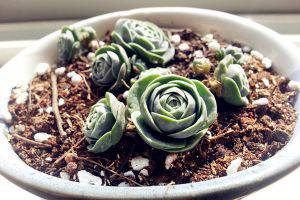
Growth Habits of the Chinese Dunce Cap
The Chinese dunce cap is native to Southeast Asia, belongs to the genus Orostachys in the Crassulaceae family, and summer is its growing season.
It prefers a warm, dry environment with plenty of sunlight, is not cold-tolerant, and the winter temperature must not drop below 5°C. It tolerates partial shade and drought.
Favorite temperature: the suitable temperature is 20-25°C.
Watering: it fears waterlogging and strong light; water in spring and autumn.
Propagation: mostly by sowing seeds or dividing offsets.
Pests and diseases: prone to scale insects.
Combination suggestion: recommended companion plants are Sedum rubrotinctum and Kalanchoe fedtschenkoi.
Care Tips for the Chinese Dunce Cap
Place a newly purchased potted plant on a windowsill with a sheer curtain; do not place it in a shady, poorly ventilated spot.
Potting soil: repot every spring. Use a mix of leaf mold, potting soil and coarse sand, with a small amount of bone meal added.
Watering: water moderately from spring to autumn; keep dry in winter.
Temperature: stop watering when the summer temperature rises above 40°C. It rather likes fertilizer; fertilize once a month during the growing season.
Pests: when only a few scale insects are found, they can be picked off and killed; when there are many, spray with a 1000-fold dilution of 50% omethoate emulsifiable concentrate.
Propagation Methods for the Chinese Dunce Cap
Seed propagation: sow as soon as the seeds mature; the suitable germination temperature is 13-18°C.
Division propagation: divide in spring, which can be done together with repotting.
For more professional agricultural science and technology information, please scan the QR code to follow WeChat: NongXunNET

Please indicate the source when reprinting.