Detailed Explanation of the Distribution Range and Growth Habits of Maxillaria
Maxillaria is a perennial herbaceous plant of the genus Maxillaria in the orchid family (Orchidaceae). There are about 200 species in this genus, mostly distributed in Central and South America.
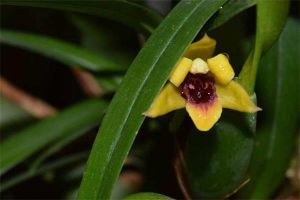
Growth Habits of Maxillaria
Maxillaria prefers a hot and humid climate, and requires sufficient sunlight. In spring, autumn and winter the sunlight is relatively mild, so full sun can be tolerated; in summer, move it to a spot with partial sun or avoid the strong direct midday light, and a shade net can also be used to block part of the light.
Sphagnum moss is the preferred growing medium as it has better water retention; water when the sphagnum moss is half dry. When short of water, the pseudobulbs will shrivel and develop wrinkles, but they will recover as soon as they are watered again. Every spring and summer, new shoots sprout again from the base of the pseudobulbs and grow extremely fast. It is recommended to repot into a larger pot as needed, so that besides retaining moisture better, the pot will not tip over because it is top-heavy.
Because it grows fast, it needs more fertilizer. It is recommended that, besides regularly applying some slow-release fertilizers such as Magic Fertilizer and Hi-Control as a base fertilizer, when growth is faster in spring and summer you can also apply some quick-acting fertilizer, such as Hyponex No. 2 20-20-203,000 times dilution, watered once a week. Propagation is mainly by division, preferably in spring and summer; each 3-5 bulbs can be divided into one unit and planted separately into pots.
Ornamental Value of Maxillaria
Perhaps the flowers of Maxillaria are not especially outstanding, but its fragrance is very attractive; just plant one and the whole room will be filled with scent. Friends who want to buy one should take advantage of the flowering season to buy it at the flower market, otherwise once the flowering season has passed it will not be so easy to find, because although a non-flowering Maxillaria can also be appreciated as a foliage plant, without the fragrance to complement it, there is less desire to buy it, so the flower vendors will not put it on display.
For more professional agricultural science and technology information, please scan the QR code to follow WeChat: NongXunNET

Please indicate the source when reprinting.