What are the characteristics and symbolic meaning of honeysuckle?
Honeysuckle, also known as Japanese honeysuckle. Because the flowers of Japanese honeysuckle first open white and later turn yellow, it is named honeysuckle ("gold-silver flower"). It blooms in March, with a slight fragrance, and the base carries a red tint; when the flower first opens, it is white. Because one base bears two flowers, with the two stamens extending outward, forming pairs that are inseparable, shaped like a male and female accompanying each other and also like mandarin ducks dancing in pairs, it is therefore called Yuanyang vine.
Other names for honeysuckle
Honeysuckle is also known as Japanese honeysuckle and Yuanyang vine
Habits of honeysuckle
Honeysuckle is a perennial semi-evergreen twining and creeping shrub.
Honeysuckle is highly adaptable, likes sunlight, tolerates shade, is strongly cold-resistant, and also tolerates drought and moisture.
It is not demanding regarding soil, but grows best in moist, fertile, deep sandy soil, and sends out new shoots twice each year in spring and summer.
Its root system is dense and well developed, and the stems and vines can take root as soon as they touch the ground. It tends to grow poorly in shady places alone.
It can reach an altitude of up to 1500 m.
Propagation methods
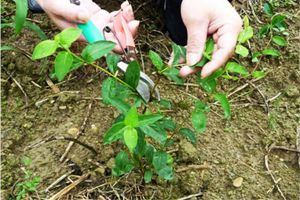
The main propagation methods for honeysuckle are seed propagation and cutting propagation.
Common pests and diseases
Common pests and diseases of honeysuckle include: brown spot disease, powdery mildew, aphids, inchworms, anthracnose, and longhorn beetles
For more professional agricultural science and technology information, please scan the QR code to follow WeChat: NongXunNET

Please indicate the source when reprinting.