What are the aliases of Stringy Stonecrop? Let us show you its other names
Stringy Stonecrop, a succulent plant of the genus Sedum in the Crassulaceae family, has creeping stems that root easily; its sterile branches and flowering stems are slender, creeping and rooting at the nodes, continuing up to just below the inflorescence, 10-25 cm long. Leaves are in whorls of 3, oblanceolate to oblong, 15-28 mm long and 3-7 mm wide.
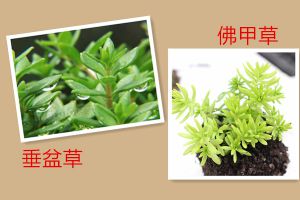
Aliases of Stringy Stonecrop
Gouya Banzhi, Gouya Ban, Shuya Banzhi, Shizhijia, Fozhijia, Banzhilian, Yangjicao, Gouyachi, Guazicao, Kuijingtian, Shecao, Gouyacao, Shitoucai, Shanhuhua, Baiwugong, Sanye Fojiaacao, Diwugongcao, Taiyanghua, Wangkaikou, Shizhijia
Stringy Stonecrop's growing habits
Wild varieties grow on sunny hillsides, in rock crevices, beside ditches and in moist places along roadsides below 1600 m elevation. It is relatively easy to care for when grown at home.
Stringy Stonecrop likes a warm, humid, semi-shaded environment. It is highly adaptable and relatively drought-tolerant and cold-tolerant. It is not fussy about soil and grows best in loose sandy loam. It is not strict about light; generally it is suitable for growing under moderate light and also tolerates weak light. The optimum growing temperature is 15-25°C, and the wintering temperature is 5°C.
Stringy Stonecrop's main values
Ornamental: Stringy Stonecrop's excellent traits as a lawn grass and its tolerance of extensive management make it worth widely promoting and applying in urban landscape projects such as roof greening, ground cover, slope protection, flower beds and hanging baskets, and it can serve as a dedicated lawn grass for roof greening in northern regions. It can be planted as courtyard ground cover and can also be hung indoors for appreciation.
Medicinal: clears heat and drains dampness; removes toxicity and reduces swelling; stops bleeding and nourishes blood. It mainly treats damp-heat jaundice; gonorrhea; diarrhea and dysentery; snake and insect bites; scalds and burns; sore throat; mouth ulcers and eczema; and shingles.
For more professional agricultural science and technology information, please scan the QR code to follow WeChat: NongXunNET

Please indicate the source when reprinting.