What is the common name of the Cornus officinalis flower? Let's find out together.
Cornus officinalis is a deciduous tree plant, and its ripe fruit is used as traditional Chinese medicine. It is produced from East China to the middle and lower reaches of the Yellow River, growing on shaded and damp stream banks, forest edges, or within forests at an altitude of 400-1500 m. It is also distributed in Japan and Korea.
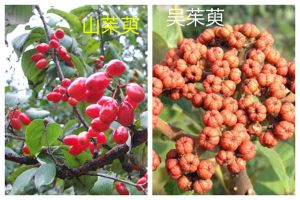
Alternative names of Cornus officinalis
Cornus officinalis is a traditional Chinese medicine, also known as Shanyurou, Yaozhao, Zaopi, Shusuanzao, Rouzao, Shuuzao, Jizu, Shizao, Yurou, Yaozhao, Tianmuzi, Shanyurou, Shizao'er.
Morphological characteristics of Cornus officinalis
Cornus officinalis is a deciduous tree or shrub, 4-10 m tall. The bark is grayish-brown, with opposite leaves, ovate-lanceolate or ovate-elliptic, small flowers, and yellow petals.
Growth habits of Cornus officinalis
Cornus officinalis is a positive tree species of the warm temperate zone. The suitable growth temperature is 20-30 °C, and growth is poor when it exceeds 35 °C. It has strong cold resistance, can tolerate low temperatures, and grows well.
Cornus officinalis is relatively shade-tolerant but also likes sufficient light. It usually grows well in the middle and lower sections of hillsides, on shaded slopes, sunny slopes, valleys, and both banks of rivers, and is generally distributed in areas at an altitude of 400-1800 m, among which 600-1300 m is more suitable.
Cornus officinalis should be planted in well-drained, fertile sandy loam rich in organic matter. Clay soil should be mixed with an appropriate amount of river sand to increase drainage and aeration.
For more professional agricultural science and technology information, please scan the QR code to follow WeChat: NongXunNET

Please indicate the source when reprinting.