How to grow marguerite daisies? Cultivation methods and precautions
Introduction: Other names for marguerite daisy include marguerite, Paris daisy, and cineraria. Growth habits of the marguerite daisy: Marguerite is a plant in the Asteraceae family, native to Australia and Southern Europe. It blooms in December and in May of the following year. It can be grown as a potted ornamental plant, and its green foliage can also serve as a background, providing a very good
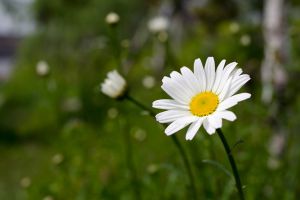
Other names for marguerite daisy
Marguerite, Paris daisy, and cineraria.
Growth habits of the marguerite daisy
Marguerite is a plant in the Asteraceae family, native to Australia and Southern Europe. It blooms in December and in May of the following year. It can be grown as a potted ornamental plant, and its green foliage can also serve as a background, providing a very good contrasting effect.
Marguerite daisy likes a moist environment and is afraid of water accumulation and waterlogging. It is not tolerant of heat; during high summer temperatures, leaf drop may occur. Its cold tolerance is not strong, so in winter the temperature needs to be well controlled to ensure it survives the winter safely.
Marguerite daisy has very strong reproductive capacity; sometimes even just roots, stems, and leaves can survive. In some areas, if you are not careful, marguerite can become the dominant plant.
The flower language of marguerite daisy
The flower language of marguerite daisy - expectant love, pride, satisfaction, joy.
The original name of marguerite is marguerite, because in the 16th century, a Norwegian princess liked this fresh and refined little white flower very much, so she named it after herself. Because marguerite also means maiden in the West, it has been given a deeper meaning. If a plant called marguerite were placed in front of you, would you take a few more looks?
For more professional agricultural science and technology information, please scan the QR code to follow WeChat: NongXunNET

Please indicate the source when reprinting.